
Decoding the ADA Room so You Can Rest Easy
Decoding the ADA Room so You Can Rest Easy
What is an ADA Hotel Room?
The ada hotel room meaning refers to a guest room designed and equipped to comply with the Americans with Disabilities Act (ADA) Standards for Accessible Design. These rooms ensure equal access and a comfortable stay for guests with disabilities.
- ADA Compliant: Meets federal accessibility standards.
- Accessible Features: Includes specific modifications for mobility, hearing, and sometimes visual impairments.
- Equal Access: Ensures people with disabilities can use the room and its amenities on par with other guests.
The ada hotel room meaning is crucial for travelers with disabilities and hoteliers alike. It describes a guest room specially designed to meet the accessibility standards set by the Americans with Disabilities Act. This federal law ensures that people with disabilities have equal access to public accommodations, including hotels.
For hoteliers, understanding and implementing ADA requirements is not just a legal obligation. It is also a commitment to inclusivity. It shows a dedication to providing a welcoming experience for all guests. Millions of people globally experience disability, representing a significant market for the hospitality industry. Offering accessible rooms helps hotels serve this market and avoid legal issues.
This guide will explain what makes a hotel room ADA compliant. We will cover everything from physical room features to digital booking system requirements.
As the co-founder of WCAG Pros, I, Matthew Post, have spent over two decades in web development. My work focuses on identifying and resolving complex website issues, with a strong emphasis on accessibility and WCAG compliance, directly impacting how information about ada hotel room meaning is presented online.
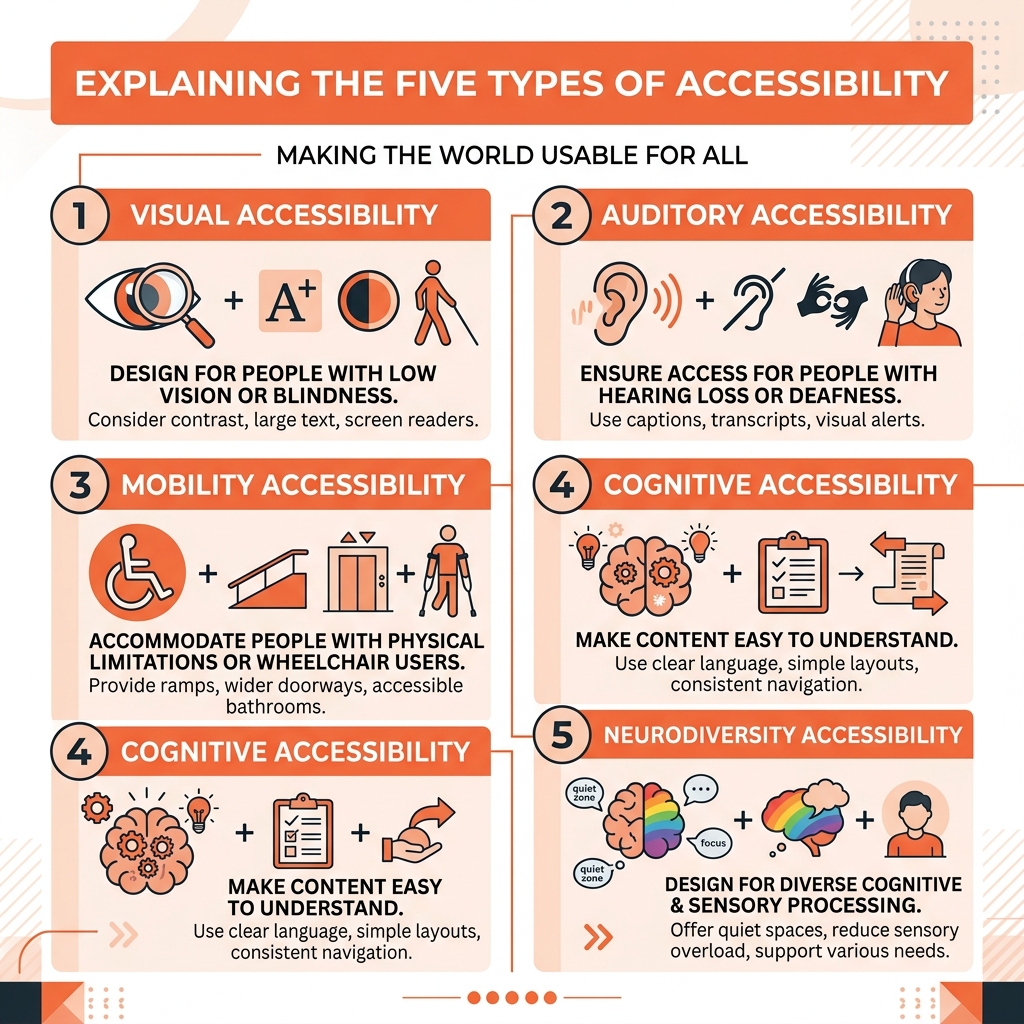
Understanding the ADA Hotel Room Meaning and Legal Standards
When we talk about the ada hotel room meaning we are diving into a vital piece of civil rights history. The Americans with Disabilities Act was signed into law in 1990 to protect people with disabilities from discrimination. For the hospitality world this falls under Title III which covers public accommodations. This includes hotels, motels, and inns.
Essentially an ADA room is any guest room that meets the strict technical standards laid out by the government. You might see it defined formally as a Definition of ADA room which is a room that allows a person with a disability to enjoy the same level of comfort and independence as any other guest.
The law focuses on “transient lodging” which generally refers to facilities that provide guest rooms for short-term stays of 30 days or less. Whether it is a giant resort or a cozy bed and breakfast in Norco CA the rules apply. There is a small exception for owner-occupied buildings with five or fewer rooms but almost every other hotel must play by the rules.
In 2010 the Department of Justice issued revised standards. These 2010 ADA Standards updated how many rooms are needed and what specific features they must have. Compliance is not optional. If a hotel ignores these standards they face hefty fines and lawsuits. More importantly they shut out a massive group of travelers who just want to enjoy a vacation without worrying if they can get through the bathroom door.
Key Features of Mobility and Hearing Accessible Rooms
Not all disabilities are the same so not all accessible rooms are the same. The ada hotel room meaning actually splits into two main categories: mobility accessible and hearing accessible. Sometimes a room has both but the law requires a specific number of each.
Mobility features focus on physical space. Think about a guest in a wheelchair. They need room to turn around and they need to reach the light switches. Hearing features focus on communication. If the fire alarm goes off a guest who is deaf needs a visual signal to know there is an emergency.

To help you visualize the differences we have put together a quick comparison of what these rooms usually include.
| Feature | Mobility Accessible Room | Hearing Accessible Room |
|---|---|---|
| Door Width | At least 32 inches clear width | Standard width is okay |
| Bathroom | Grab bars and roll-in shower or tub seat | Standard bathroom is okay |
| Alarms | Audible alarms | Visual strobe light alarms |
| Notification | Standard door peephole | Visual door knock indicator |
| Reach Range | Lowered switches and thermostats | Standard height is okay |
| Communication | Standard telephone | TTY or volume-control phone |
For a deeper dive into these specifics you can check out this Comprehensive Guide To ADA Room Requirements.
Physical Design and the ADA Hotel Room Meaning for Mobility
If you are a wheelchair user the physical layout of a room is make-or-break. A mobility accessible room starts with the entrance. The doorway must provide at least 32 inches of clear passage. This means the door itself cannot block the opening when it is swung wide.
Inside the room space is king. There must be a 60-inch turning radius. This allows a wheelchair user to make a full 360-degree turn without hitting furniture. We also look at the “reach range.” Light switches, thermostats, and even the closet rods must be between 15 and 48 inches from the floor.
The bathroom is often the most modified area. In California we have very specific rules to ensure safety. For example California ADA Hotel Bathroom Requirements state that toilets must be at a “comfort height” of 17 to 19 inches. Sinks must have knee clearance so a guest can roll right up to the basin.
Furniture placement is also key. We make sure there is at least 36 inches of clear path around the beds. Speaking of beds the height should ideally be between 17 and 23 inches to make transfers from a wheelchair easier. It is all about removing those tiny obstacles that create big problems.
Communication Equipment and the ADA Hotel Room Meaning for Hearing
For guests with hearing or visual impairments the ada hotel room meaning shifts toward communication. Safety is the top priority here. Every hearing accessible room must have a visual fire alarm. These are bright strobe lights that flash when the alarm is triggered.
But communication goes beyond emergencies. How do you know if someone is knocking on your door? These rooms use notification devices. When someone presses the doorbell or knocks a light inside the room flashes.
Telephones are also modified. They must have volume controls and the hotel should provide a TTY (teletypewriter) device if requested. This allows guests to type messages back and forth over the phone line. Even the television must have closed captioning enabled. These features ensure that a guest who is deaf or hard-of-hearing has the same access to information and safety as anyone else.
Hotel Compliance Requirements and Room Distribution
You might wonder if a hotel can just put all their accessible rooms in the basement. The answer is a loud no. The ADA requires “dispersion.” This means accessible rooms must be spread out among the different types of rooms offered. If a hotel has luxury suites and basic economy rooms they must provide accessible options in both categories.
The number of rooms required depends on the total size of the hotel. Here is a quick look at the quotas:
- 1 to 25 total rooms: 1 mobility room.
- 51 to 75 total rooms: 3 mobility rooms (at least 1 with a roll-in shower).
- 101 to 200 total rooms: 5 mobility rooms.
Hearing accessible rooms have their own separate quotas. A hotel with 50 rooms needs at least 2 hearing accessible rooms. You can find the full breakdown in this Accessible Lodging Factsheet.
One of the most important rules is price parity. A hotel cannot charge more for an ADA room just because it has extra features. That would be discrimination. If a standard room costs one hundred dollars the accessible version must also cost one hundred dollars.
Hotels must also look at their “safe harbor” status. If a hotel was built or renovated to meet the 1991 standards they might not have to update everything immediately unless they do a new renovation. However they still must remove barriers if it is “readily achievable.” For more on how these laws apply to businesses you can read Does My Website Have to Be ADA Compliant?.
Digital Accessibility and Booking Systems
We often focus on the physical room but the guest experience starts way before they walk through the lobby. It starts on the website. This is where we at WCAG Pros spend most of our time. If a guest cannot book an accessible room online they might never show up at all.
In 2012 the Department of Justice clarified that hotel reservation systems must be accessible. This means a guest must be able to:
- Find and book an accessible room through the same system as everyone else.
- See detailed descriptions of the accessible features to decide if the room meets their needs.
- Be confident that the room they booked will actually be held for them.
A vague label like “ADA Room” is not enough. The website should describe the bed height, the type of shower, and the communication features. This is a legal requirement under 28 C.F.R. § 36.302(e).
Digital accessibility is about more than just the text on the page. The booking calendar must work with screen readers. The buttons must be easy to click for someone with limited motor skills. If your website is a maze of broken links and unlabelled images you are essentially putting a “No Vacancy” sign up for people with disabilities.
For hotels looking to stay ahead of the curve we recommend following the Website ADA Compliance for Hotels guide. You can also use our ADA Website Compliance 2025 Accessibility Checklist to audit your current site.
Frequently Asked Questions about ADA Hotel Rooms
We hear a lot of questions about the ada hotel room meaning and how these rooms work in the real world. Here are the most common ones we encounter.
How many accessible rooms are required in a hotel?
The number is based on a sliding scale. For mobility rooms the requirements start at 1 room for small hotels (1-25 rooms). As the hotel gets bigger the percentage changes. For example a hotel with 100 rooms needs 4 mobility accessible rooms. Once you get over 500 rooms the requirement is 2 percent of the total rooms.
Hearing accessible rooms are calculated separately. A hotel with 100 rooms needs 7 hearing accessible rooms. The goal is to ensure that no matter how big the hotel is there are enough options for everyone.
Do ADA rooms cost more than standard rooms?
No. This is a very common concern but federal law is very clear. Hotels must offer accessible rooms at the same price as standard rooms of the same type. If you are booking a queen room and the only one left is the ADA queen room the hotel cannot upcharge you for the grab bars or the extra floor space. This ensures equal access to all price points within the hotel.
What is the difference between an accessible room and a standard room?
The main difference is the “path of travel” and the specialized equipment. A standard room might have a narrow bathroom door or a thick carpet that is hard to roll a wheelchair over. An accessible room will have wider pathways (at least 36 inches) and hard flooring or low-pile carpet.
You will also see lowered features like the peephole in the door and the towel racks in the bathroom. In a standard room the shower might be a tub you have to climb into. In an ADA room you will find either a transfer shower with a seat or a roll-in shower with no curb at all.
Conclusion
Understanding the ada hotel room meaning is about more than just following a checklist of measurements. It is about hospitality in its purest form. It is the idea that every traveler deserves a safe, comfortable, and dignified place to sleep regardless of their physical or sensory abilities.
Hotels that embrace these standards often see a boost in loyalty. When a guest finds a room that truly meets their needs they are much more likely to return and leave a glowing review. But physical access is only half the battle. Your digital presence must be just as welcoming.
At WCAG Pros we help businesses navigate the complex world of digital accessibility. Whether you are a small inn or a large chain we can help you ensure your booking system and website are compliant with WCAG standards. This protects you from legal risks and opens your doors to a wider audience.
If you want to learn more about the future of accessibility check out our guide on ADA Compliance for Small Businesses in 2025. And if you are ready to see where your website stands you can always Request a WCAG Audit from our team. Let us help you make sure every guest can rest easy from the moment they click “book” to the moment they check out.
Read more website accessibility articles
Get Help With Your Website
We'll follow up with info about:
- The process
- Cost
- Timeline
We promise to respect your privacy, and never abuse the information you provide. We will not sell or rent your information to any third party.
By submitting this form, you consent to receive SMS messages and/or emails from SEM Dynamics LLC, dba WCAG Pros. To unsubscribe, follow the instructions provided in our communications. Msg & data rates may apply for SMS. Your information is secure and will not be sold to third parties.