
Wear Your Accessibility Badge with Pride
Wear Your Accessibility Badge with Pride
Why ADA Compliance Badge Certification Matters for Your Website
ADA compliance badge certification is the process of having your website independently audited, remediated, and verified against accessibility standards like WCAG 2.1 Level AA, resulting in a displayable badge and documentation that proves your site is accessible to users with disabilities.
Here is a quick overview of how to obtain one:
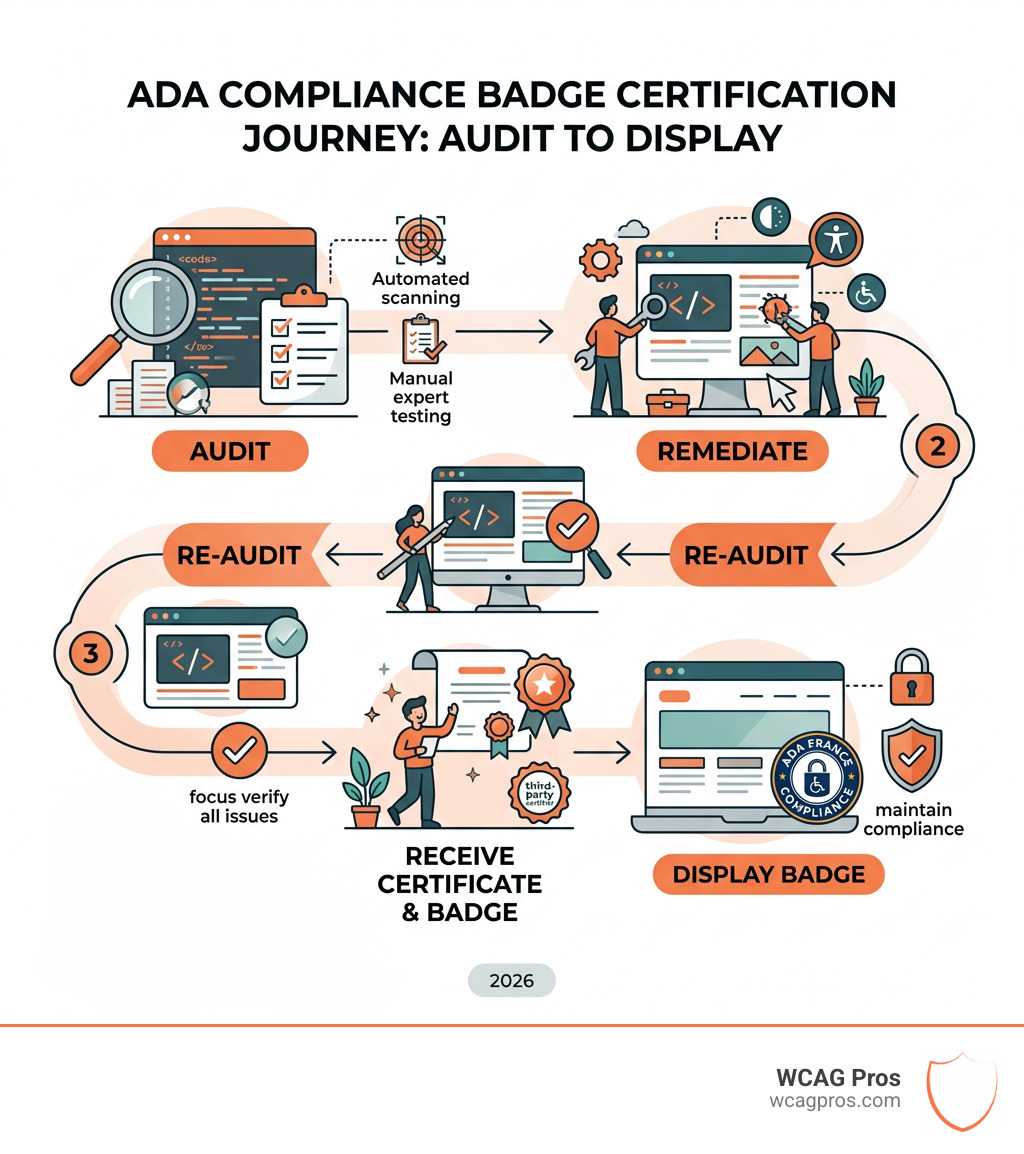
- Audit your website using a combination of automated scanning and manual expert testing
- Remediate any accessibility issues found in the audit report
- Re-audit to confirm all issues have been resolved
- Receive your certificate and badge from a credible third-party certifier
- Display the badge on your website and maintain compliance over time
ADA lawsuits against websites have increased by 120% in the last two years, targeting e-commerce stores, SaaS platforms, educational institutions, and government sites alike. With over 51 million Americans living with disabilities, and 1.3 billion people worldwide, the stakes for ignoring web accessibility have never been higher.
Getting certified is not just about avoiding legal risk. It is about making your site genuinely usable for everyone.
I’m Matthew Post, co-founder of WCAG Pros and a web developer with over 20 years of experience specializing in WCAG compliance and ADA compliance badge certification. I have personally overseen hundreds of website audits and remediation projects, helping businesses navigate the growing complexity of digital accessibility requirements. In this guide, I will walk you through everything you need to know to earn and maintain a legitimate accessibility certification for your website.
Understanding the ADA Compliance Badge Certification Process
When we talk about an accessibility badge, we are talking about more than just a pretty icon in your footer. A legitimate ADA compliance badge certification represents a rigorous journey of validation. It tells the world that a third-party expert has looked under the hood of your website and confirmed that your code follows the rules.
Most certifications today reference the Web Content Accessibility Guidelines (WCAG). While WCAG 2.1 has been the gold standard for years, we are now seeing a shift toward WCAG 2.2 to address newer technologies and user needs. In the United States, federal agencies and their contractors must also adhere to the Revised 508 Standards, which largely align with WCAG but include specific requirements for government ICT.
If you are wondering where your site stands right now, you can learn how to tell if your website is ADA compliant by looking for key indicators like keyboard navigability and proper color contrast. However, a true certification requires a deep dive.
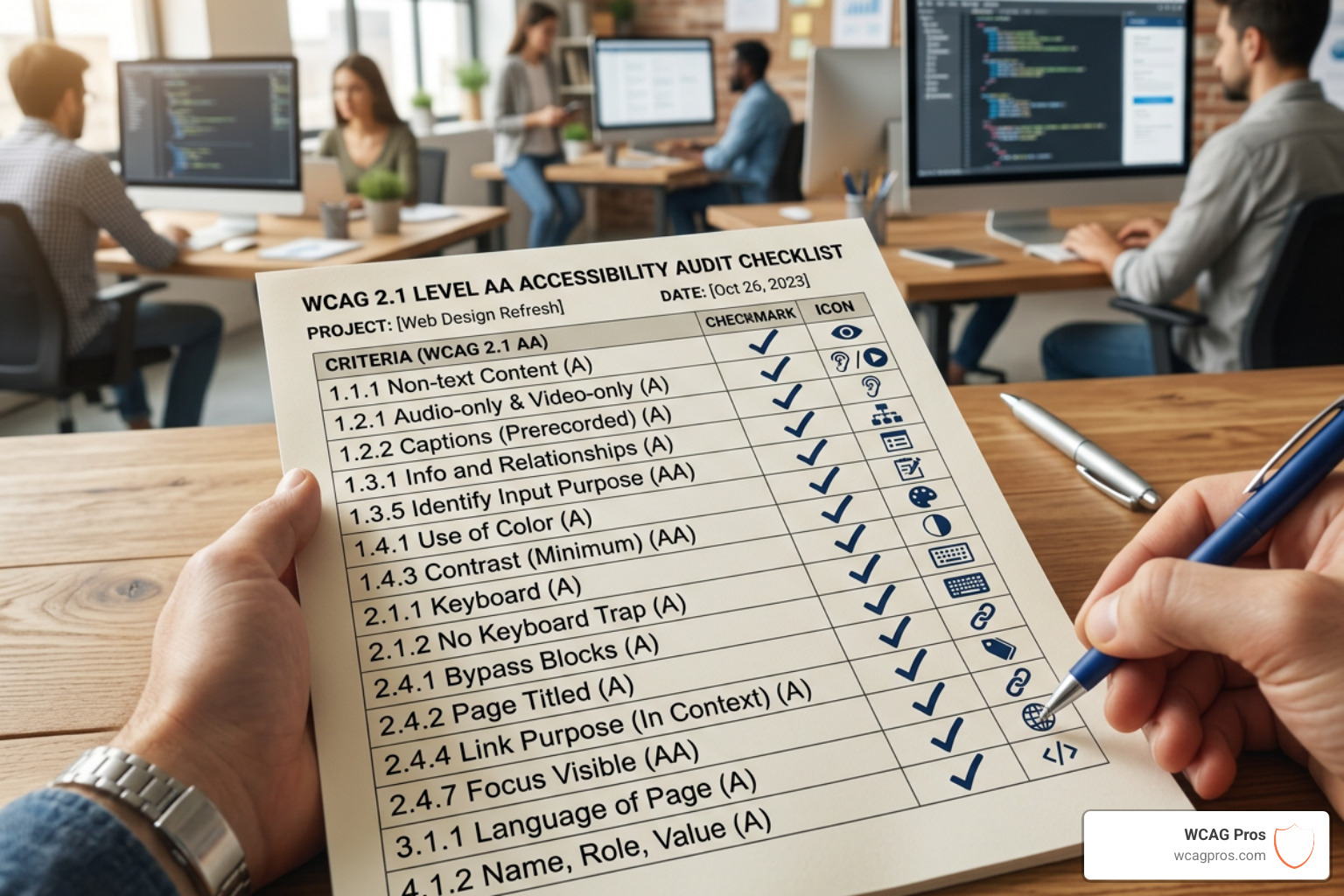
One of the most important things to understand is the difference between a quick automated scan and a manual expert audit. Automated tools are great for catching “low hanging fruit” like missing alt text, but they miss about 70 percent of accessibility issues.
| Feature | Automated Scans | Manual Expert Testing |
|---|---|---|
| Speed | Instant | Takes days or weeks |
| Accuracy | High for code syntax | Essential for context |
| Screen Reader Testing | None | Comprehensive |
| Keyboard Navigation | Limited | Thorough |
| Legal Weight | Low | High (Evidence of due diligence) |
Recommended Levels for Business and Government
WCAG is broken down into three levels of conformance:
- Level A: The bare minimum. If you don’t meet this, your site is likely unusable for many people.
- Level AA: This is the target for most businesses and legal requirements. In April 2024, the Department of Justice updated Title II of the ADA to explicitly require WCAG 2.1 Level AA for state and local government web content and mobile apps.
- Level AAA: The highest and most difficult level to achieve. While great for specialized sites, it is usually not required for general business.
You can read more about the difference between WCAG AA and AAA to decide which path is right for your organization. For most of our clients in Norco CA, aiming for Level AA is the sweet spot for legal protection and user experience.
Components of a Legitimate Accessibility Certification Package
A real ADA compliance badge certification is a package of documents, not just a digital image. If a company offers you a badge without these components, you should be wary.
Accessibility Statement
This is a 3-5 paragraph document that explains your commitment to accessibility. It should outline the standards you meet, provide a way for users to report issues, and state your ongoing maintenance plan. We believe creating a professional accessibility statement is one of the most important steps in showing good-faith effort.
Log of Fixed Issues
This is your “paper trail” for legal defense. It lists every error found during the audit and the specific code fix applied to resolve it. If you are ever challenged in court, this log proves that you took active steps to fix your site.
Voluntary Product Accessibility Template (VPAT) and ACR
For those working with the public sector or large enterprises, you may need an Accessibility Conformance Report (ACR) documentation. This report uses the VPAT template to provide a detailed breakdown of how your product meets Section 508 or WCAG standards.
Verification and Authenticity of Digital Badges
Legitimate badges often come with unique identification numbers or are hosted on platforms like Acclaim. This allows anyone to click the badge and see a timestamped certificate and the name of the issuing body. Because websites change daily, a static image with no link to a live certificate is essentially meaningless. You can find more info about WCAG audit services to see how we verify our certifications.
Business and Legal Benefits of Digital Inclusivity
Beyond the warm feeling of doing the right thing, there are massive business advantages to earning an ADA compliance badge certification.
Market Expansion and Brand Reputation
There are an estimated 1.3 billion people worldwide living with significant disabilities. This community, along with their families and friends, represents a $13 trillion global spending power. If your site is inaccessible, you are literally turning away customers who are ready to spend.
SEO Advantages
Search engines love accessible websites. Many of the things we do for accessibility, like using proper header structures, adding alt text to images, and providing video transcriptions, are the exact same things that help your site rank higher on Google.
Avoiding Litigation with an ADA Compliance Badge Certification
The legal landscape is shifting. While Title II covers government entities, Title III of the ADA applies to “places of public accommodation.” Courts have increasingly ruled that websites are public accommodations. If you are asking yourself, “Does my website have to be ADA compliant?” the answer for almost every business is a resounding yes.
A certification serves as a powerful shield. It demonstrates “good-faith effort” and provides a documented roadmap to total compliance. In many cases, having a certification and a clear accessibility statement can prevent a demand letter from turning into a full-blown lawsuit.
Maintaining Compliance and Avoiding Snake Oil Services
The internet is full of “quick fix” solutions that promise instant ADA compliance for a small monthly fee. We call these “snake oil” services.
Pitfalls and “Snake Oil” Services to Avoid
The most common culprits are automated overlays or widgets. These are snippets of code that sit on top of your site and claim to fix accessibility issues automatically. Here is the truth. They don’t work. In fact, many screen reader users find these overlays make the site harder to use. Even worse, lawyers are now specifically targeting sites that use these widgets because they signal that the site owner knows there are issues but hasn’t actually fixed the underlying code.
Effective Strategies for Ongoing Compliance
Websites are dynamic. Every time you add a blog post, a new product, or a landing page, you risk falling out of compliance. Real compliance requires WCAG remediation strategies that fix the actual source code.
Strategies for Ongoing ADA Compliance Badge Certification
To keep your badge valid, we recommend a proactive approach:
- Monthly Audit Reports: Use automated tools to catch simple errors in new content.
- Quarterly Re-certification: Have an expert perform a manual check of new features or major updates.
- Content Creator Training: Teach your team how to write alt text and use proper heading levels.
- Developer Best Practices: Ensure your dev team understands ARIA labels and keyboard focus management.
Staying on top of your site is easier when you follow a 2025 accessibility checklist to ensure no new updates break your hard-earned compliance.
Frequently Asked Questions about Accessibility Badges
Do accessibility badges provide 100 percent legal immunity?
No. There is no such thing as 100 percent immunity in the legal world. However, a legitimate certification is the best defense you can have. it shows the court that you have taken comprehensive steps to provide equal access and that you have a process for maintaining that access.
How often should a website be re-certified for ADA compliance?
We typically recommend a full re-certification every 6 to 12 months, depending on how often your site changes. For high-traffic e-commerce sites, quarterly re-audits are a safer bet to ensure new products and promotions stay accessible.
What is the difference between a badge and an official certification?
A badge is the visual symbol you display on your site. The certification is the underlying process and documentation (the audit report, the log of fixes, and the certificate) that proves the badge is earned. A badge without a certification process is just a picture.
Conclusion
Earning an ADA compliance badge certification is a journey that pays off in every direction. It protects your business from rising litigation, opens your doors to a massive underserved market, and improves the experience for every single visitor to your site.
At WCAG Pros, we don’t believe in shortcuts or overlays. We provide comprehensive page-by-page audits covering all 54 WCAG A and AA success points. Our team handles the manual testing and provides the actual code fixes you need to get certified. We even offer free re-audits to ensure everything is perfect before we issue your badge.
Ready to lead the way in digital inclusivity? Secure your ADA compliance badge with a professional WCAG audit today and wear your commitment to accessibility with pride.
Read more website accessibility articles
Get Help With Your Website
We'll follow up with info about:
- The process
- Cost
- Timeline
We promise to respect your privacy, and never abuse the information you provide. We will not sell or rent your information to any third party.
By submitting this form, you consent to receive SMS messages and/or emails from SEM Dynamics LLC, dba WCAG Pros. To unsubscribe, follow the instructions provided in our communications. Msg & data rates may apply for SMS. Your information is secure and will not be sold to third parties.