
The Ultimate Guide to ADA Compliant Grab Bars: Requirements Explained
The Ultimate Guide to ADA Compliant Grab Bars: Requirements Explained
Technical Specifications for ADA Compliant Grab Bars
Understanding the exact physical dimensions of ADA compliant grab bars is essential for meeting official guidelines and ensuring user safety. Federal accessibility standards set clear rules for bar diameter, wall clearance, and installation height.
The outer diameter of a compliant grab bar must measure between 1.25 inches and 1.5 inches. This specific thickness allows individuals with limited hand strength or arthritis to maintain a firm grip without straining their fingers. Non-compliant safety rails often feature overly thick pipes or thin decorative tubing that can cause hands to slip during transfer movements.
Wall clearance is equally critical. ADA standards require a clearance of 1.5 inches between the bar surface and the wall. This measurement is not a rough guideline but an absolute spacing rule designed to prevent arm entrapment. If the space behind the bar is too wide, a user’s arm could slip behind the bar during a fall, causing severe injury. If the space is too narrow, a user cannot wrap their fingers fully around the gripping surface.
All standard wall-mount bars must be installed so that the top of the gripping surface sits between 33 inches and 36 inches above the finished floor. Furthermore, any non-control object projecting near the bar, such as a soap dispenser, must maintain at least 12 inches of clear space above the top of the bar. For comprehensive commercial guidelines, see the ADA Bathroom Safety Standards.
| Specification | ADA Compliant Standard | Non-Compliant / Residential Alternatives |
|---|---|---|
| Outer Diameter | 1.25 to 1.5 inches | Under 1.25 inches or over 1.5 inches |
| Wall Spacing | 1.5 inches absolute clearance | Less than 1.5 inches or loose rope / strap gap |
| Structural Load | 250 lbs force (minimum) | Less than 250 lbs (often suction-cup rated) |
| Mounting Height | 33 to 36 inches from floor | Variable / non-standard height |
| End Finishing | Rounded ends returning to wall | Exposed sharp pipe edges or decorative open end-caps |
Weight Load Capacity and Anchoring Rules for ADA Compliant Grab Bars
A safety bar is only as dependable as the wall behind it. ADA standards require that ADA compliant grab bars, along with their mounting flanges and fasteners, withstand at least 250 pounds of structural force applied from any direction.
Many residential-grade decorative grab bars exceed this baseline, supporting up to 500 pounds of force when anchored correctly. However, achieving this weight rating requires proper installation methods. Anchoring a grab bar directly into solid wood studs or structural wood blocking behind the wall is always the most secure method.
When solid wood studs are not situated directly where the bar needs to be mounted, installers must use specialized heavy-duty hollow-wall anchors, retrievable wall anchors, or backing plates rated for safety hardware. Mounting a load-bearing grab bar directly into unsupported drywall with simple plastic expansion plugs is extremely hazardous and guaranteed to fail under load.
Materials, Finishes, and Slip Resistance Standards
The material composition of a grab bar affects both long-term durability and safety in wet environments. High-grade 304 gauge stainless steel is the preferred industry standard because it resists rust, corrosion, and chemical degradation from commercial cleaning agents.
To maximize safety in water-heavy areas like showers, grab bars often feature textured or knurled gripping surfaces. These textured finishes provide friction when hands are wet or soapy. For high-end residential or boutique commercial installations, decorative styles offer full strength without giving the bathroom an institutional look.
Options such as the 42″ Decorative Grab Bar in Venetian Bronze or sleek matte black finishes allow facility managers and homeowners to maintain physical safety while matching modern design aesthetics.
Placement Requirements for Toilets, Showers, and Bathtubs
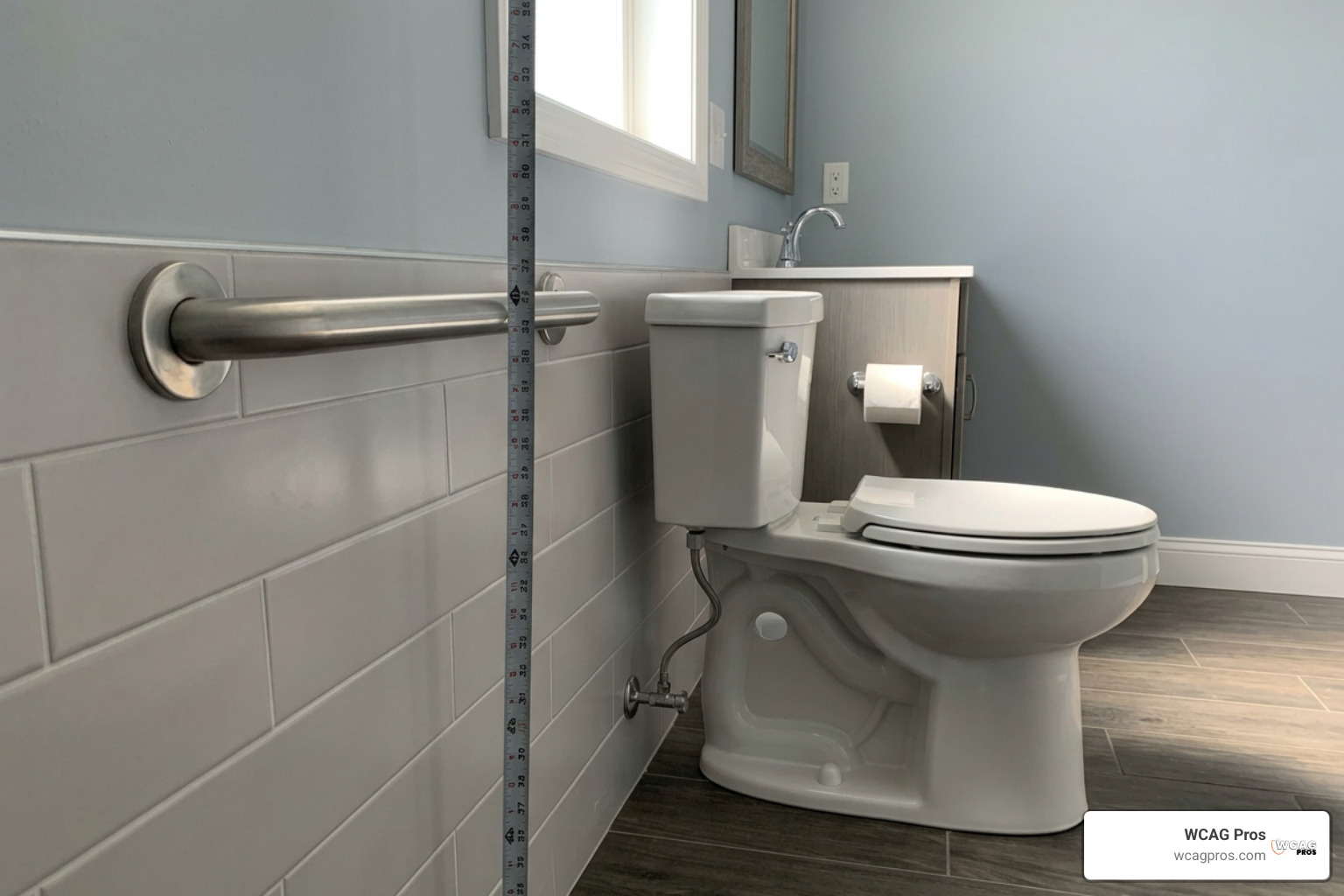
Proper placement of ADA compliant grab bars depends entirely on the fixture type and room layout. Installing bars at incorrect distances or heights can prevent users from completing safe transfers and will result in building inspection failures.
To review how safety hardware integrates with broader room layouts, consult our ADA Compliant Hotel Room Requirements Guide.
Toilet Stall Placement Standards for ADA Compliant Grab Bars
In accessible toilet stalls, horizontal grab bars are required on both the side wall and the rear wall.
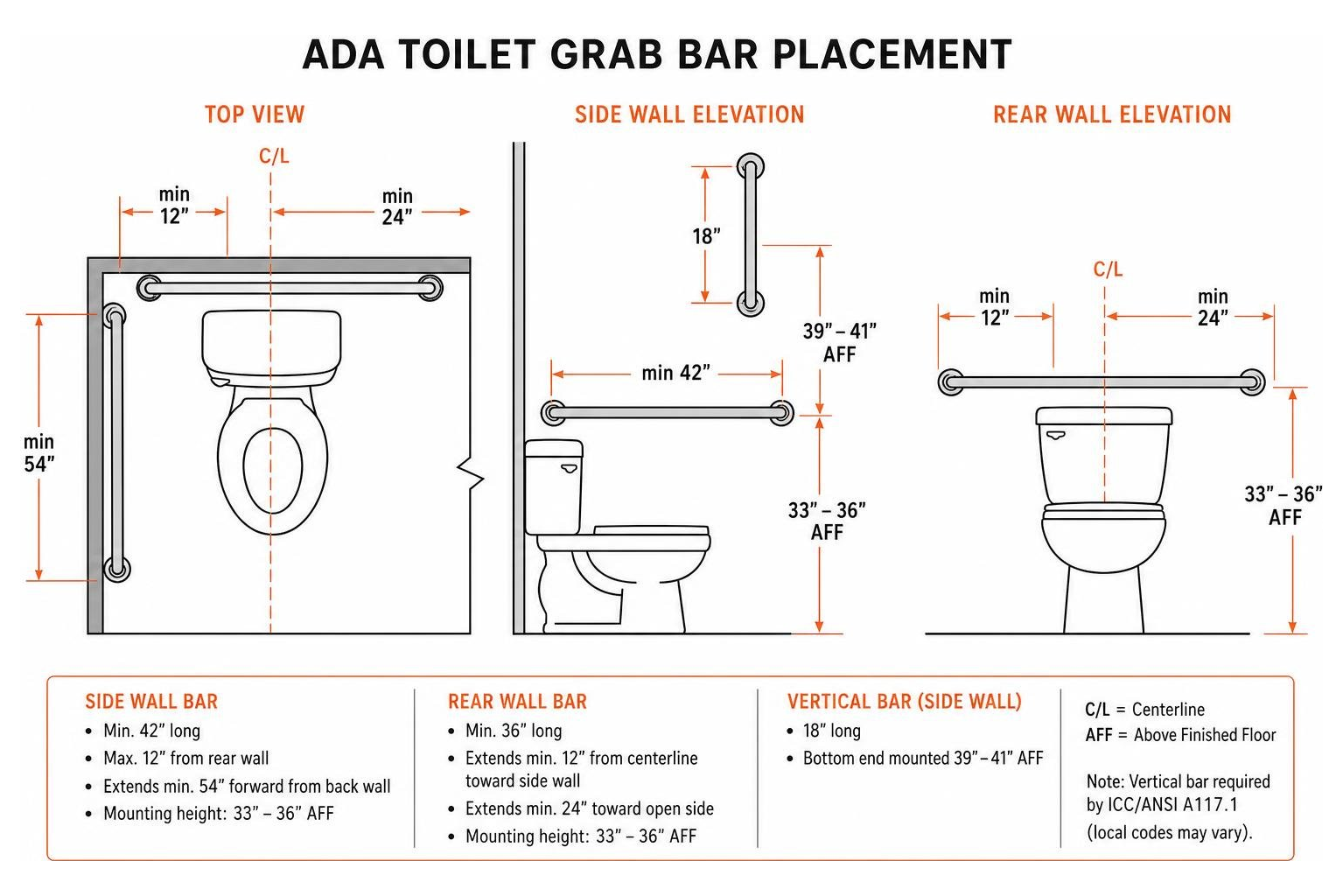
- Side Wall Bar: Must be at least 42 inches long. It must be mounted a maximum of 12 inches from the rear wall and extend at least 54 inches forward from the back wall.
- Rear Wall Bar: Must be at least 36 inches long. It must extend a minimum of 12 inches from the toilet centerline toward the adjacent side wall, and at least 24 inches toward the open side of the stall.
- Height: Both horizontal bars must be mounted between 33 and 36 inches above the finished floor.
While federal ADA rules require these horizontal bars, local municipal codes often follow ICC/ANSI A117.1 standards, which also mandate an 18-inch vertical grab bar on the side wall. This vertical bar is typically placed with its bottom end mounted 39 to 41 inches above the floor, providing leverage for users pulling themselves up from a seated position.
Roll-In Showers, Transfer Stalls, and Bathtubs
Shower and bathtub placement rules vary according to stall configuration:
- Standard Roll-In Showers (30″ x 60″): Require continuous horizontal grab bar coverage across all three walls (or a side-wall bar of at least 54 inches and a back-wall bar of at least 36 inches) located 33 to 36 inches above the shower floor.
- Alternate Roll-In Showers: Require bars on the back wall and the wall opposite the seat.
- 36″ x 36″ Transfer Shower Stalls: Require an L-shaped bar (or two adjoining horizontal bars) extending across the full depth of the control wall and continuing 18 inches onto the back wall.
- Bathtubs: Require distinct grab bar placement based on whether the tub uses a permanent end seat or a removable seat. Bathtubs require two parallel horizontal bars on the back wall, along with control-wall bars to assist users during entry and exit.
For additional layout considerations in public accommodations, check out our guide on ADA Compliant Hotel Rooms: Everything You Need to Know.
Types of ADA Grab Bars and Non-Drilling Solutions
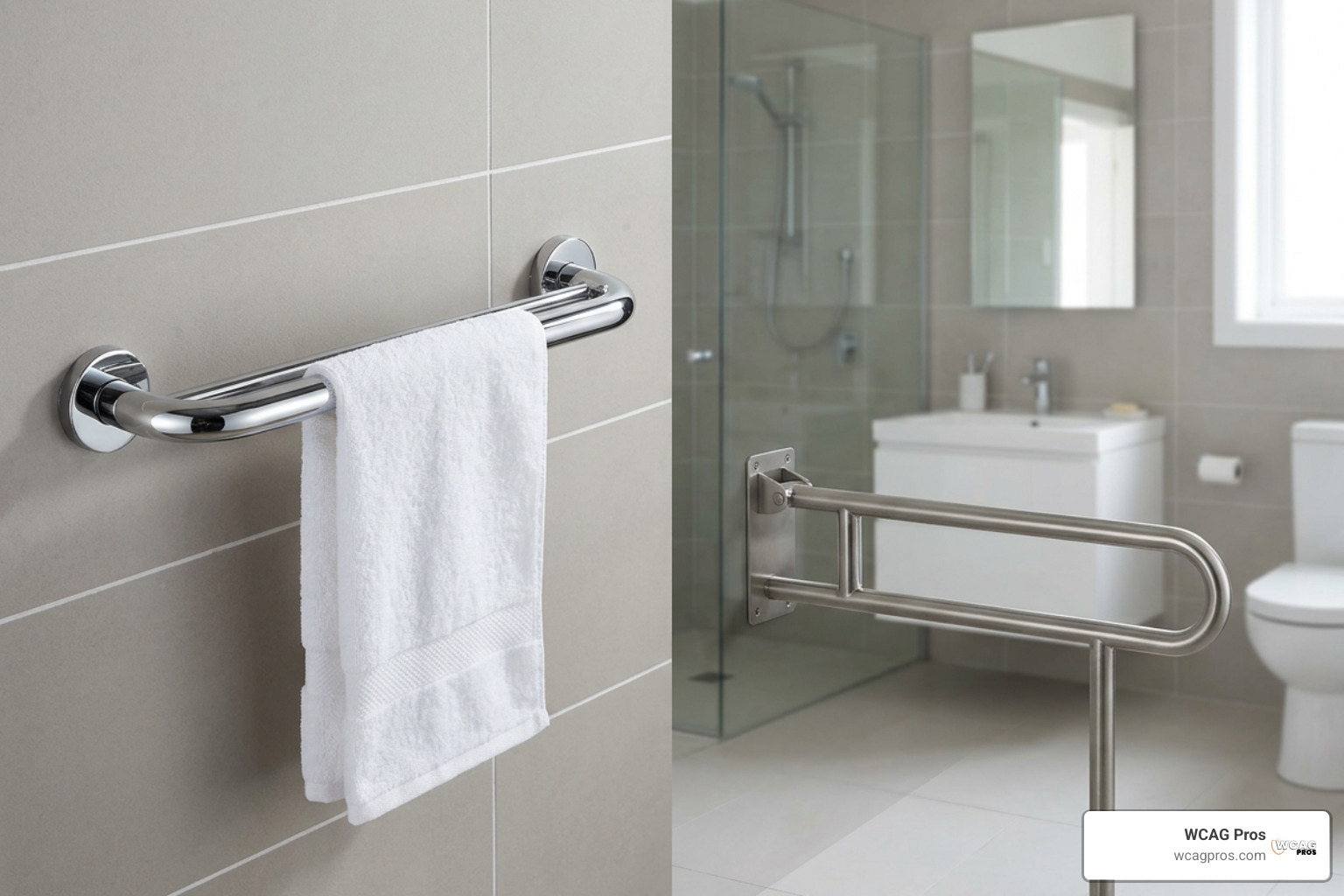
Modern safety design has evolved far beyond industrial metal pipes. Today, a wide selection of ADA compliant grab bars is available to fit diverse architectural layouts and personal tastes.
Decorative, Fold-Down, and Multi-Function Bars
- Decorative Multi-Function Bars: Integrate safety into everyday bathroom fixtures. Options include grab bars designed to double as heavy-duty towel racks, toilet paper holders, or shower wall niches.
- Shower Slide Bar Combos: Products like the 36″ Contemporary Grab Bar in Chrome can double as a slide rail for a hand-held shower wand when paired with compatible mounting accessories.
- Fold-Down and Flip-Up Bars: Ideal for tight spaces or multi-user restrooms. These bars mount behind the toilet and pull down horizontal to the floor for support, then lift vertically out of the way to allow lateral wheelchair transfers.
Non-Drilling Options for Renters and Minimal Structural Blocking
Renters and property owners working with historical buildings often face challenges with wall drilling. While traditional wall-mount bars require solid drilling into studs or heavy-duty anchors, alternative solutions exist for lightweight balance support:
- Floor-to-Ceiling Tension Transfer Poles: These heavy-duty poles use vertical tension between the floor and ceiling joists to provide full weight-bearing capacity without requiring wall drilling. They are ideal for rental properties.
- Suction-Cup Grab Bars: Suction options can be installed without drilling, but they do not meet official ADA compliance standards. Suction devices are rated strictly for light balance assistance and can dislodge unexpectedly under full body weight. They should never be relied upon for heavy weight transfers.
Commercial Compliance vs. Residential Installation Differences
Understanding the distinction between commercial mandates and residential modifications helps property owners make practical investments.
Commercial spaces governed by Title III of the Americans with Disabilities Act must comply strictly with spatial dimensions, bar diameters, heights, and load standards. Failing an inspection can prevent a business from receiving its Certificate of Occupancy. For a deeper look at commercial obligations, read our comprehensive summary on A Comprehensive Guide to ADA Business Requirements.
In residential settings, homeowners adapting spaces for aging-in-place have complete freedom to customize hardware. While adhering to federal standards provides a great baseline, residential bars can be placed at custom heights or angles tailored to a specific individual’s height and physical needs.
Frequently Asked Questions About ADA Grab Bars
Can grab bars be installed without drilling into wall studs?
Yes, grab bars can be safely mounted without hitting wood studs by using heavy-duty retrievable wall anchors or hollow-wall toggle bolts rated for structural loads. However, for non-drilling solutions, tension-mounted floor-to-ceiling poles are required. Suction cup bars do not support full body transfers.
What is the difference between commercial and residential grab bar rules?
Commercial installations are bound by legal federal ADA requirements and local building codes, which dictate exact bar lengths, clearance, and height ranges. Residential installations can follow these rules as best practices but permit customization to suit specific personal mobility requirements.
How much weight must an ADA-compliant grab bar support?
An ADA-compliant grab bar and its mounting hardware must withstand a concentrated structural load of at least 250 pounds applied from any direction. Many high-end residential hardware options support up to 500 pounds when properly anchored into wall studs.
Conclusion
Installing proper physical accessibility hardware is a vital component of creating safe, welcoming spaces for everyone. By following structural standards for ADA compliant grab bars, facility managers, contractors, and homeowners can prevent dangerous falls and ensure full compliance with federal guidelines.
Physical safety hardware in built environments goes hand-in-hand with digital accessibility in the modern world. Just as physical barriers prevent access to public spaces, digital barriers prevent people with disabilities from accessing online services, reservation portals, and business information.
At WCAG Pros, we help businesses meet digital accessibility expectations through thorough WCAG 2.2 website audits, code remediation guidance, and compliance certification. Ensure your organization offers complete accessibility across both physical facilities and online platforms by reaching out to our expert consulting team today.
Read more website accessibility articles
Get Help With Your Website
We'll follow up with info about:
- The process
- Cost
- Timeline
We promise to respect your privacy, and never abuse the information you provide. We will not sell or rent your information to any third party.
By submitting this form, you consent to receive SMS messages and/or emails from SEM Dynamics LLC, dba WCAG Pros. To unsubscribe, follow the instructions provided in our communications. Msg & data rates may apply for SMS. Your information is secure and will not be sold to third parties.