
X Common Accessibility Companies Mistakes You Can’t Afford to Make
X Common Accessibility Companies Mistakes You Can’t Afford to Make
Why Choosing the Right Accessibility Companies Can Make or Break Your Compliance
accessibility companies are specialized firms that help businesses make their websites and digital products usable by people with disabilities. Here is a quick overview of the main types:
| Type | What They Do | Best For |
|---|---|---|
| Automated SaaS platforms | Scan for WCAG issues using software | Fast detection, ongoing monitoring |
| Manual consulting firms | Expert human audits and remediation | Deep compliance, legal defense |
| Blended providers | Automated tools plus human testing | Most thorough coverage |
| Disability-led consultancies | Testing by people with lived experience | Authentic usability validation |
| Document remediation specialists | PDF, EPUB, and media accessibility | Content-heavy organizations |
The right partner depends on your goals. But picking the wrong one is a costly mistake.
ADA lawsuits against commercial websites have surged in recent years. And many business owners think they are protected because they installed an overlay widget or ran an automated scan. They are not.
The hard truth is that automated tools catch only 30% to 60% of WCAG issues at best. Overlays do not fix your underlying code. And courts are not impressed by shortcuts.
Choosing the wrong accessibility vendor does not just leave you exposed legally. It can also waste your budget and give you a false sense of security.
I’m Matthew Post, co-founder of WCAG Pros and a web developer with over 20 years of experience auditing sites for WCAG compliance. I’ve personally supervised hundreds of audit and remediation projects for businesses working with accessibility companies and have seen which approaches protect organizations and which ones fall dangerously short. In the sections below, I’ll walk you through the most critical mistakes to avoid so you can choose a partner that delivers real results.
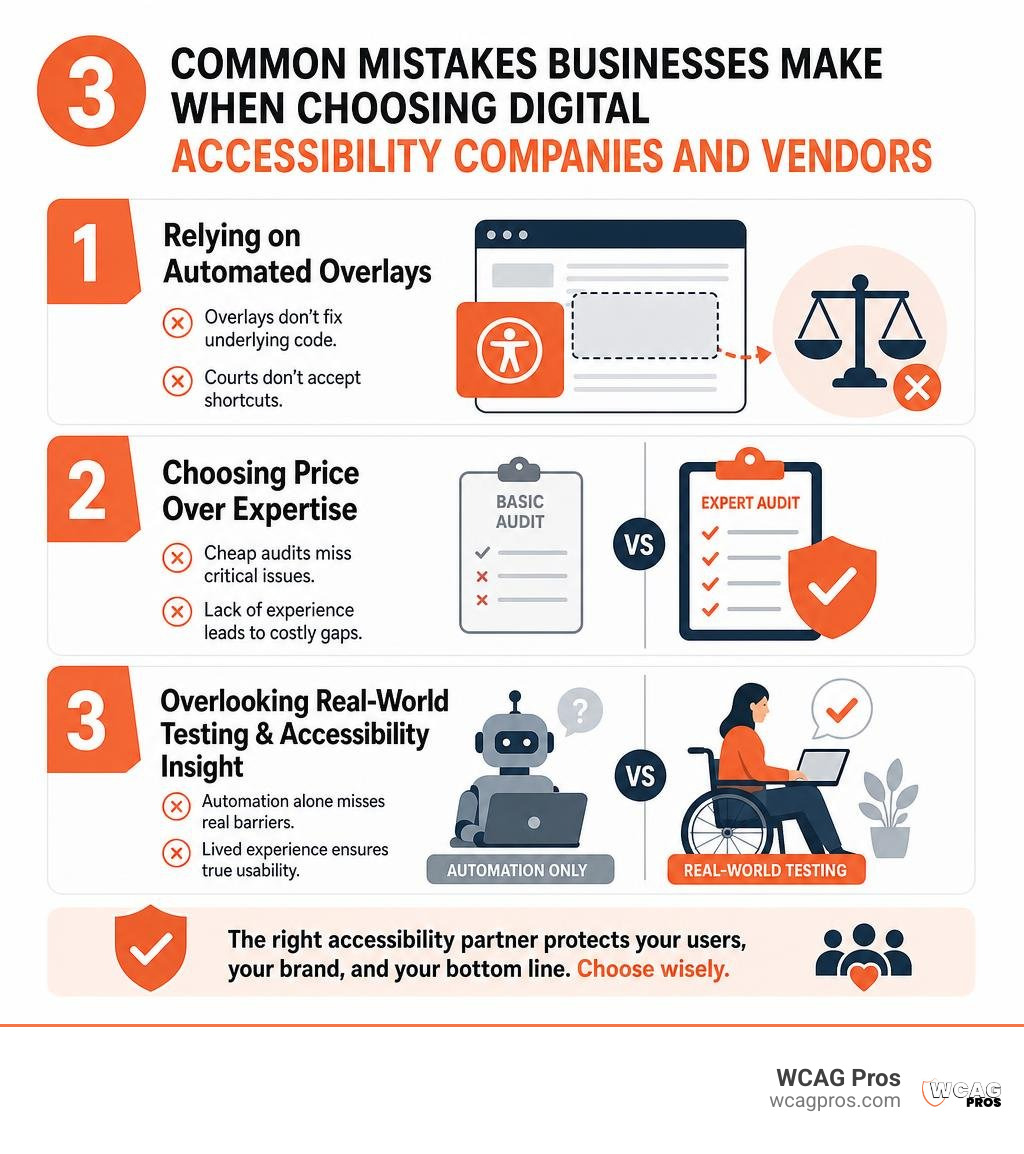
Mistake 1: Relying on Automated Overlays Instead of Real Accessibility Companies
Many business owners fall for the pitch of quick-fix overlay widgets. These tools promise instant compliance with a single line of JavaScript. They claim to handle all your ADA Accessibility needs without touching your actual code.
But relying on these widgets is one of the most dangerous shortcuts you can take. Overlay widgets do not solve the root issues in your website code. Instead, they place a temporary visual band-aid over your site.
This approach often makes the user experience much worse for people who rely on screen readers or keyboard navigation. Assistive technologies already have custom settings built in for the user. When an overlay attempts to override those settings, it can create a confusing and unusable mess.
True compliance requires deep source code remediation. Real accessibility companies will look under the hood of your website to fix structural issues.
When you partner with a professional service, you receive clean and permanent fixes. If you want to understand how genuine code-level fixes work, you can explore our Professional ADA Remediation Services You Can Trust to see why manual code corrections are the only way to secure your digital presence.

To help you understand the differences, we have mapped out how automated overlays compare to actual native code remediation.
| Feature | Automated Overlays | Native Code Remediation |
|---|---|---|
| Method of Fix | Temporary JavaScript injection | Permanent source code updates |
| WCAG Coverage | Low (only cosmetic adjustments) | High (addresses all 54 success criteria) |
| Assistive Tech Friendly | Often blocks or disrupts screen readers | Works seamlessly with native devices |
| Legal Protection | Extremely weak (often targeted by lawyers) | Extremely strong (addresses root compliance) |
| SEO Impact | Neutral or negative | Highly positive (improves search indexing) |
The Limitations of Automated Testing Tools
Automated testing tools are excellent for catching simple errors. They can instantly flag missing image alt text, poor color contrast, or empty buttons. But their capabilities are strictly limited.
On average, automated tools only detect between 30% and 60% of WCAG barriers. This leaves a massive portion of your website completely unchecked.
An automated scanner cannot tell you if your alternative text actually describes the image accurately. It cannot verify if your keyboard navigation flows in a logical order. It also cannot determine if your dynamic forms are accessible during error states.
Only human experts can perform the necessary manual verification to find these complex issues. Relying solely on software scans leaves your business highly vulnerable to litigation and frustrated users. For a complete breakdown of how to identify these hidden gaps, you can consult our Website Accessibility Testing Services Definitive Guide.
Why Blended Solutions Represent the Gold Standard
The most effective digital accessibility programs do not choose between software and humans. Instead, they combine both into a blended solution.
Automated tools provide speed and efficiency. They can scan thousands of pages in minutes and flag obvious bugs. This allows your team to address simple issues quickly.
Once the automated scans clear the low-hanging fruit, expert manual testers step in. These certified professionals dig into the complex interactive elements of your application. They test your checkout flows, custom menus, and interactive widgets to ensure everything works perfectly.
This hybrid approach is the gold standard of the industry. It gives you the scalability of software alongside the precision of human expertise.
Mistake 2: Overlooking the Value of Human Testing and Lived Experience
Another common error is treating accessibility as a simple checklist of technical rules. It is easy to forget that accessibility is ultimately about real people.
A website can pass an automated validation test and still be completely unusable for a person with a physical or cognitive impairment. If your testing process does not include real human beings, you are missing the most critical perspective.
Human testing reveals usability barriers that code scanners can never find. For example, a screen reader user might get stuck in an keyboard trap inside a modal window. A user with a cognitive impairment might find your multi-step form layout too confusing to complete.
Working with professional consultants ensures that your digital assets are evaluated by real people using real assistive devices. To learn more about how expert guidance can transform your digital products, read our article on Why Hiring a Web Accessibility Consulting Firm Is a Genius Move.
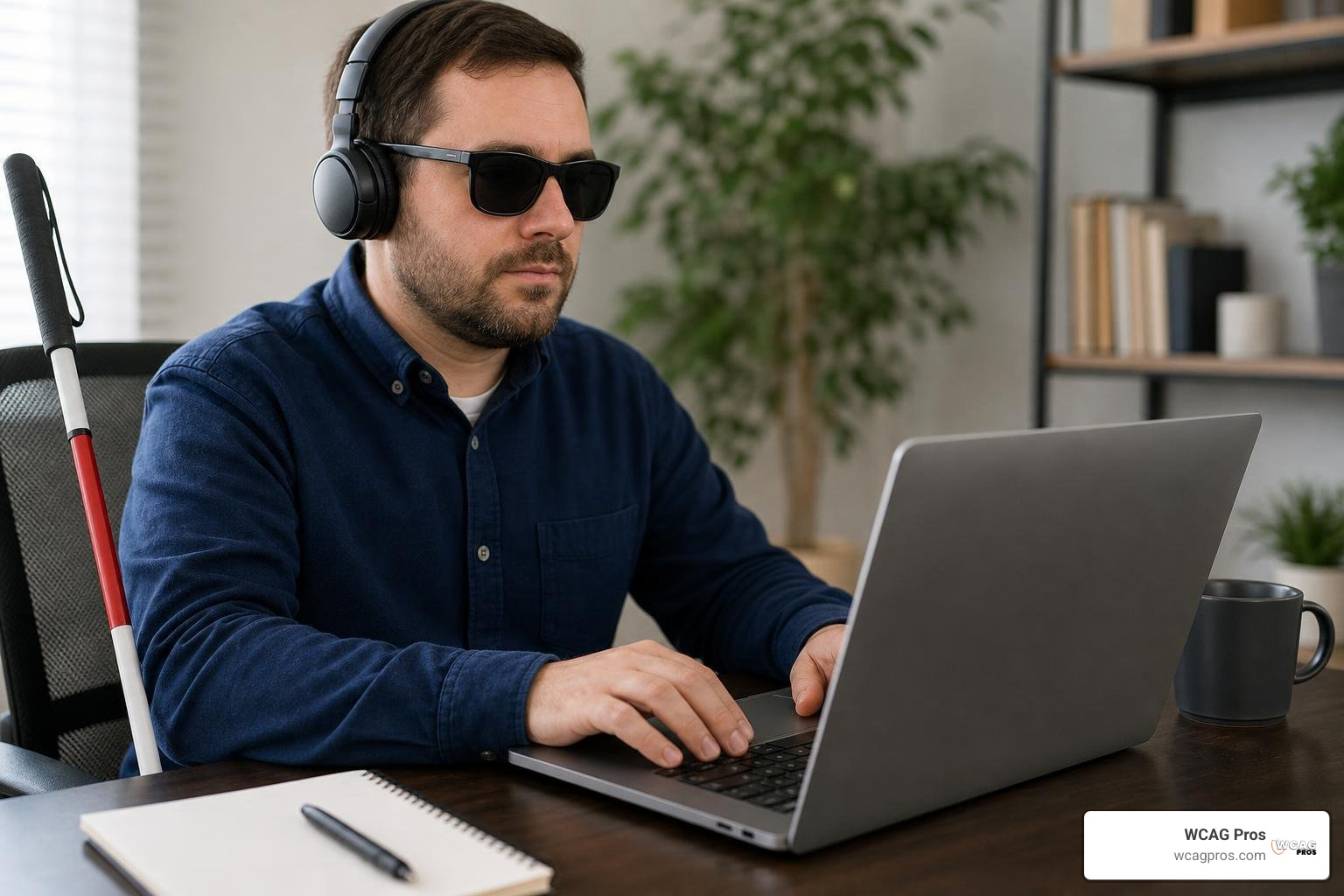
Why Top Accessibility Companies Prioritize Testers with Disabilities
The absolute best accessibility companies employ native users of assistive technologies. These are individuals who live with visual, auditory, motor, or cognitive impairments and use tools like screen readers, magnifiers, or voice control software every single day.
Their lived experience brings an unmatched level of authenticity to the testing process. They do not just check if a feature is technically compliant. They verify if it is actually usable and intuitive.
For instance, products like JAWS or ZoomText are highly complex. A sighted developer trying to simulate a screen reader will navigate a page very differently than a native, blind user.
By prioritizing testers with disabilities, you ensure your website works flawlessly in real-world scenarios. If you want to build a truly inclusive experience, we explain this process in detail in our resource on Everything You Need to Know About Comprehensive Accessibility Consulting Services.
Evaluating Vendor Expertise and Geographic Reach
When you are ready to choose an accessibility partner, you must evaluate their expertise and understanding of global regulations. The regulatory landscape has grown increasingly complex.
In the United States, public accommodations must comply with ADA Title III, while federal agencies and their contractors must meet Section 508 requirements. If you do business in Europe, you must also prepare for the European Accessibility Act.
An experienced vendor must understand how these different standards overlap and how to apply them to your specific business model. If you are located in or near Norco, California, you want a partner who is deeply familiar with California’s unique legal environment and federal compliance expectations. To help you make the right choice, we have put together a guide on How to Choose the Right Web Accessibility Consultant for 2025 to walk you through the entire evaluation process.
Mistake 3: Failing to Treat Accessibility as a Continuous Lifecycle
Many organizations make the mistake of treating digital accessibility as a one-off project. They hire a firm, run an audit, fix the flagged issues, and assume they are done forever.
But websites are dynamic. Your team is constantly publishing new content, launching new features, and updating code. Every single update has the potential to introduce brand new accessibility barriers.
Without continuous monitoring and structured governance, your accessibility levels will naturally degrade over time. This creates a cycle of compliance where you are constantly falling out of compliance and scrambling to fix issues after receiving complaints.
To break this cycle, you must treat accessibility as an ongoing business practice. You can read more about establishing a sustainable remediation workflow in our In-Depth Guide to Website Remediation Services.
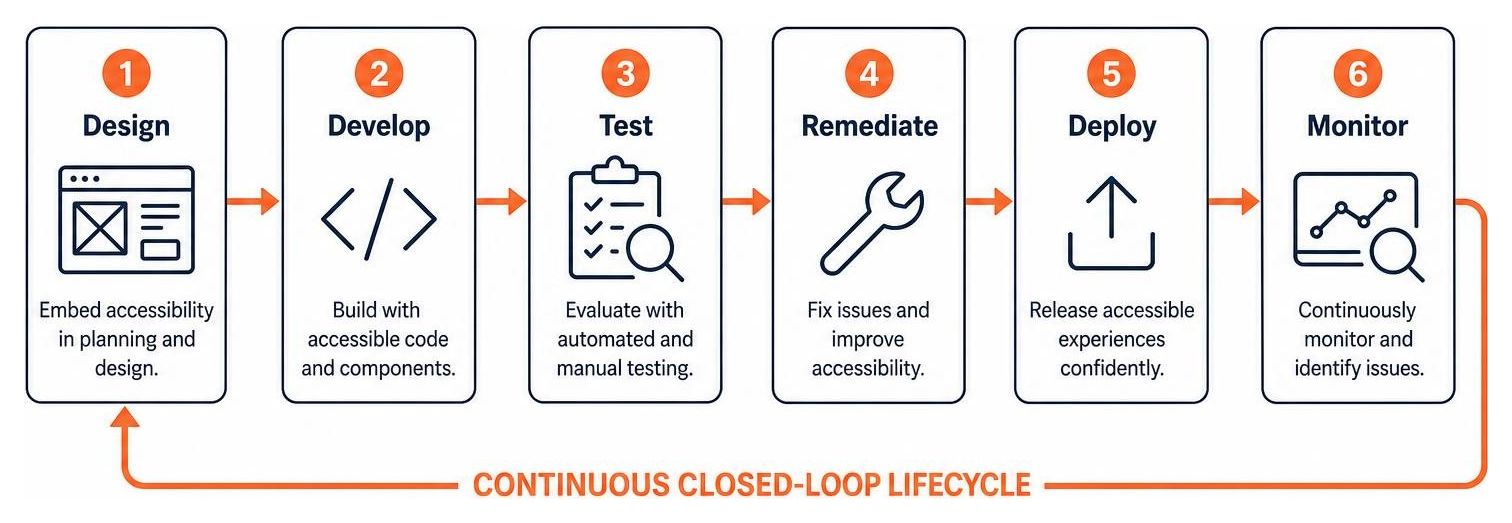
How Leading Accessibility Companies Integrate Compliance into the SDLC
The most cost-effective way to manage accessibility is to shift left. This means integrating accessibility checks into the very beginning of your software development lifecycle.
Instead of waiting until a website is fully built to run an audit, leading companies address accessibility during the design phase. Designers can use specialized plugins for design tools to check color contrast and heading structures before a single line of code is written.
Developers should also receive role-based training to write accessible code from the start. You can even integrate automated scans directly into your continuous integration and continuous deployment pipelines. This allows you to catch and resolve issues before they ever reach your production server.
By building accessibility into your everyday workflow, you can reduce administrative overhead and prevent costly post-launch fixes. Learn how our team can help you build this sustainable pipeline by reading How ADA WCAG Consultants Can Help You to Stay Compliant.
The Business Benefits Beyond Legal Compliance
While avoiding lawsuits is a major motivator, the benefits of digital accessibility go far beyond basic legal safety. When you make your website accessible, you are improving the user experience for every single visitor.
Clean semantic code and logical navigation structures make your site much easier for search engines to crawl and index. This directly boosts your search engine optimization efforts.
In the modern era of artificial intelligence, accessible websites are also much easier for AI search agents and LLMs to understand and cite. This process is known as Answer Engine Optimization.
Additionally, demonstrating a genuine commitment to digital inclusion enhances your brand reputation and opens your business to a massive market of users with disabilities. To explore these commercial advantages in depth, check out our guide on Why Your Business Needs an ADA Compliance Consultant Right Now.
Frequently Asked Questions About Web Accessibility
What is the difference between software tools and professional services?
Software tools are automated platforms that scan your website code to find common WCAG violations. They are excellent for quick checks and ongoing monitoring.
Professional services involve manual consulting where human experts manually navigate your site using assistive technologies.
A blended approach that combines both software and human testing is the best way to achieve total compliance and generate official documentation like a Voluntary Product Accessibility Template. For an exhaustive breakdown of these different service models, you can refer to our A-Z Guide to Accessible Website Services.
Which global regulations should organizations be aware of in 2026?
In 2026, organizations must be highly aware of WCAG 2.2, which is the current global gold standard for digital accessibility.
In the United States, commercial websites are governed by ADA Title III, while public entities must comply with ADA Title II. Section 508 of the Rehabilitation Act applies to federal agencies and organizations receiving federal funding.
If your business sells products or services in the European Union, you must also comply with the European Accessibility Act, which mandates strict digital accessibility standards across the private sector.
How do I obtain a VPAT for B2B procurement?
A Voluntary Product Accessibility Template is a standardized document used to show how accessible your digital product is.
To obtain a VPAT, you must partner with an accessibility firm to conduct a comprehensive audit of your software or website against WCAG 2.2 standards. The findings from this audit are then compiled into an Accessibility Conformance Report.
Having an accurate VPAT is a critical requirement for closing enterprise sales and passing government procurement reviews. If you need assistance with this certification process, you can read The Ultimate Guide to Website Accessibility Certification Services.
Conclusion
Choosing the right partner from the many accessibility companies available is one of the most important decisions your business can make. Relying on automated overlays or quick-fix widgets will leave your brand legally exposed and frustrate your users. True compliance requires a continuous, blended approach of automated monitoring and expert manual testing.
At WCAG Pros, we believe in doing accessibility the right way. We provide comprehensive, page-by-page audits covering all 54 WCAG 2.2 A/AAA success criteria. We do not just hand you a list of errors. We provide actual code-level fixes to help your development team remediate issues quickly.
We also offer free re-audits to ensure your site is completely compliant before issuing your official accessibility compliance badge. If you are ready to secure your website and welcome all users, we invite you to Get a Professional WCAG Audit with us today.
Read more website accessibility articles
Get Help With Your Website
We'll follow up with info about:
- The process
- Cost
- Timeline
We promise to respect your privacy, and never abuse the information you provide. We will not sell or rent your information to any third party.
By submitting this form, you consent to receive SMS messages and/or emails from SEM Dynamics LLC, dba WCAG Pros. To unsubscribe, follow the instructions provided in our communications. Msg & data rates may apply for SMS. Your information is secure and will not be sold to third parties.