
Secure Reliable ADA Compliance Certification for Websites to Minimize Legal Risk
How ADA Compliance Certification for Websites Works
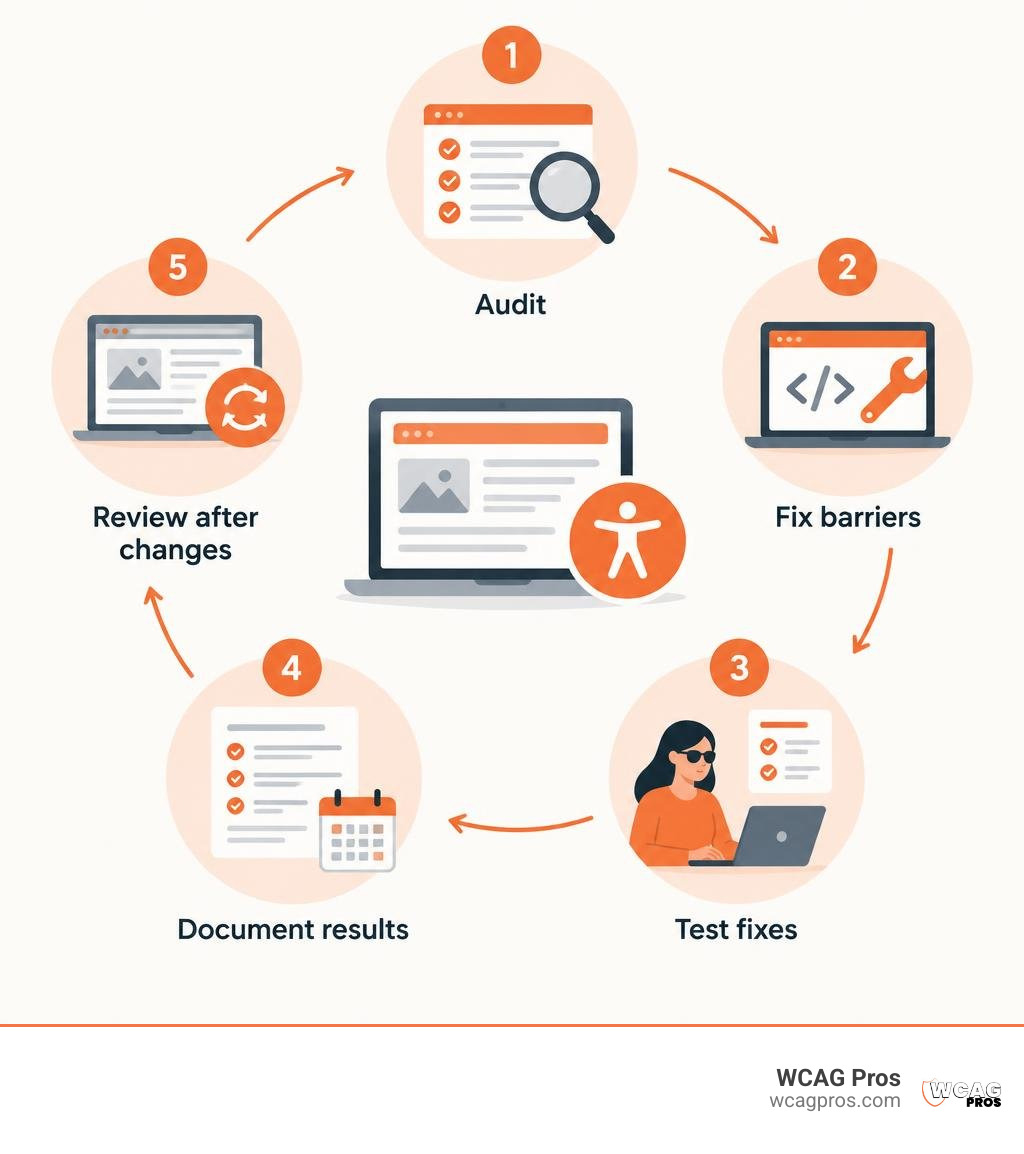
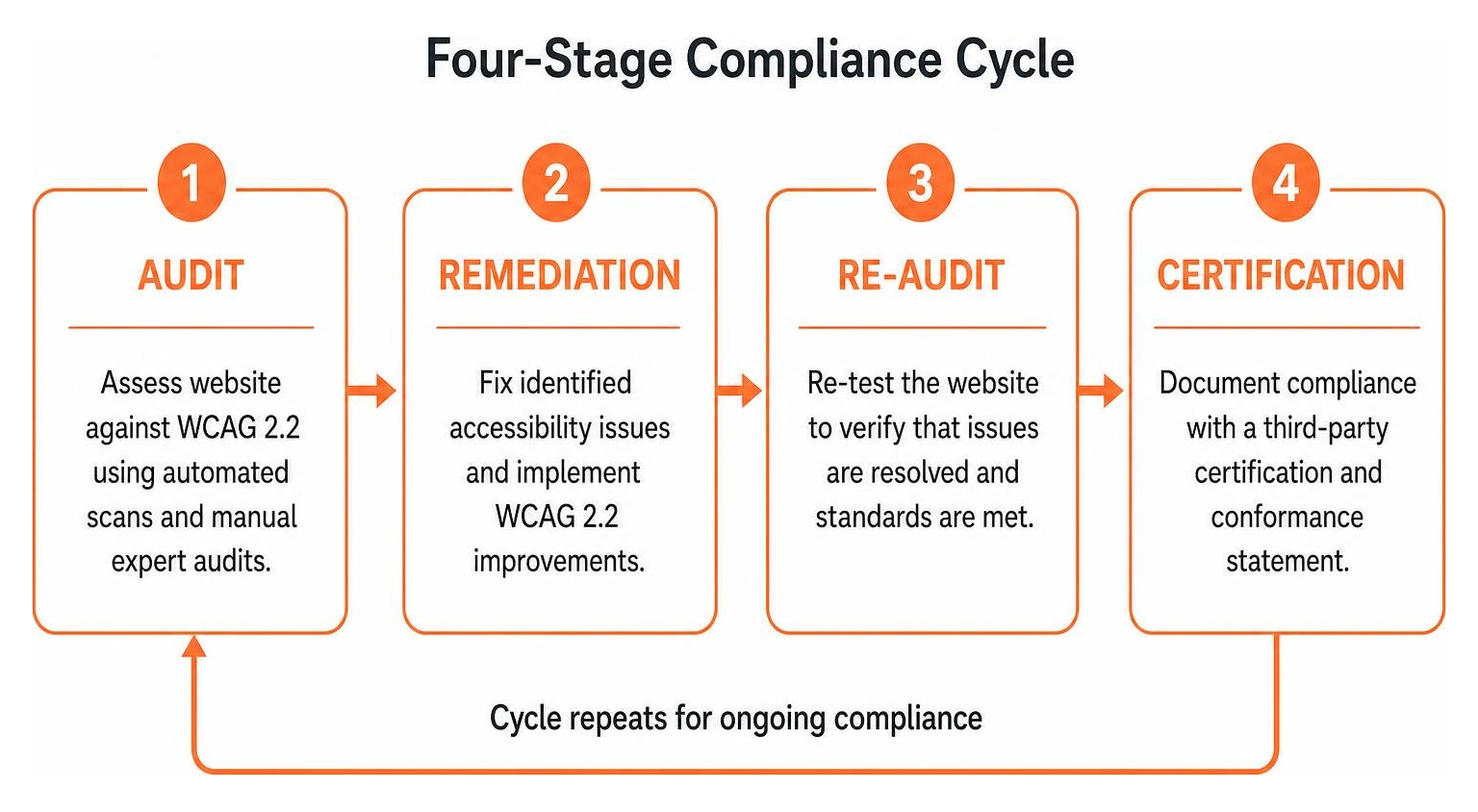
There is no official government ADA compliance certification for websites. To document your site’s accessibility, audit it against WCAG 2.2 AA, fix the barriers you find, and test the fixes with experts and people who use assistive technology. Then keep a dated report of what was tested, what was fixed, and any issues that remain. A qualified provider can issue a conformance statement or certificate based on that work, but a badge alone does not prove compliance.
For a business website, these records can help show the steps you took to make your services accessible under ADA Title III. They cannot prevent a lawsuit or replace ongoing testing when the site changes.
I’m Matthew Post, co-founder of WCAG Pros, and I have spent more than 20 years in web development. I now oversee audits and fixes that help businesses build reliable documentation for ADA compliance certification for websites.
ADA compliance certification for websites vocab explained:
- Website accessibility certification services
- website accessibility certification
- WCAG certification cost
What Is ADA Compliance Certification for Websites?
Digital accessibility is no longer optional for modern organizations. In the United States, roughly one in four adults lives with a disability, which equals over 51 million people aged 15 and older. Globally, more than 1 billion people live with some form of disability. Despite this massive demographic, studies reveal that only 3% of website homepages are fully accessible.
This widespread lack of inclusion has triggered intense legal activity. Federal ADA lawsuits surged from 2,722 in 2013 to over 11,000 in 2019, and annual lawsuit filings continue to surpass 4,000 cases each year.
Under Title III of the Americans with Disabilities Act, commercial websites are widely recognized by federal courts and the Department of Justice as places of public accommodation. When business leaders explore why your business needs an official ADA compliant web certification, they often discover that achieving verifiable compliance requires far more than pasting a decorative sticker in their website footer. It demands a systematic, evidence-based process that demonstrates full digital accessibility.
Why an Official ADA Compliance Certification for Websites Does Not Exist
A common misconception in digital governance is that a federal agency issues an official rubber stamp of approval for web compliance. In reality, no government agency, including the Department of Justice, provides an official ADA compliance certification for websites.
The statutory framework of the ADA is built on civil rights enforcement rather than administrative licensing. Instead of issuing standardized government certificates, federal courts and regulators rely on established international benchmarks, specifically the Web Content Accessibility Guidelines. State initiatives, such as the website accessibility guidelines from CA.gov, align digital standards directly with these established technical criteria. Because a direct governmental stamp does not exist, compliance is proven through detailed technical documentation, rigorous testing logs, and third-party validation.
Accessibility Statement vs. Third-Party Certification
Understanding the distinction between an accessibility statement and a technical certification is vital for building an effective risk management strategy. A public accessibility statement is a written notice published on your website that outlines your accessibility policies, known limitations, and direct contact details for users needing assistance. A third-party technical certification is a formal evaluation and evidence package provided by independent specialists after extensive testing and remediation.
| Aspect | Public Accessibility Statement | Third-Party Technical Certification |
|---|---|---|
| Primary Audience | End users and site visitors | Legal counsel, corporate auditors, enterprise buyers |
| Content Focus | Accessibility commitment, contact info, known barriers | Technical audit logs, testing scope, WCAG 2.2 conformance |
| Author | Website owner or internal team | Independent third-party accessibility specialist |
| Legal Defensibility | Demonstrates good faith and communication channels | Serves as rigorous technical evidence of compliance |
| Maintenance | Updated periodically alongside site policy updates | Requires scheduled re-auditing and technical validation |
While an accessibility statement establishes transparent communication with visitors, pairing it with technical verification creates a robust defense. Reviewing a practical guide to website accessibility certification helps teams understand how these two components work together to protect organizations while enhancing user experience.
Practical Pathways and Alternatives to Formal Certification

Because a government certificate does not exist, businesses must establish credible alternatives through systematic technical reviews. High-quality compliance relies on detailed audit trails, transparent conformance statements, and comprehensive testing documentation.
Third-Party Provider Certification and Conformance Statements
A third-party provider certification provides documented proof that an independent expert assessed your digital property against established WCAG 2.2 criteria. Unlike basic self-declarations, credible provider certifications detail the exact testing environments, assistive technologies used, and pages evaluated.
Using the certified WCAG audit process as a shield against lawsuits allows organizations to show concrete technical adherence to standards. When choosing a compliance partner, reputation matters. Working with a dedicated digital accessibility firm ensures your documentation stands up to technical and legal scrutiny while delivering meaningful, accessible experiences.
User Testing with Assistive Technology Specialists
Automated tools and visual code inspections cannot replicate the real-world experience of interacting with a website through assistive software. Involving native screen reader users and specialists with disabilities provides undeniable proof of functional accessibility.
Documented user testing sessions, including recorded screen reader interactions by blind professionals, demonstrate whether core user pathways, such as product checkouts or form submissions, are truly accessible. In legal disputes, clear video evidence showing a user navigating complex digital workflows without encountering barriers offers compelling proof of meaningful access.
The Core Process to Achieve Defensible Compliance Documentation
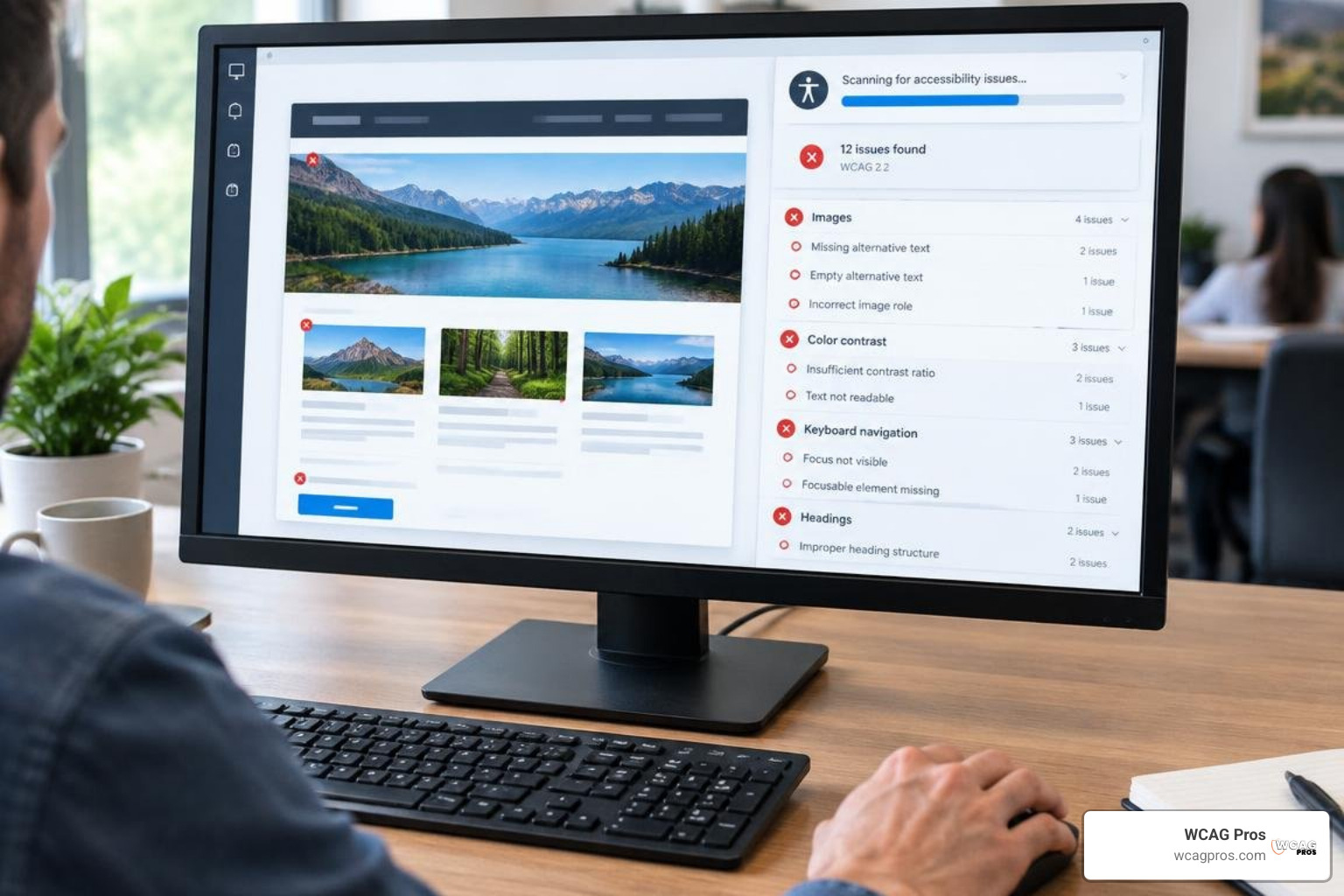
Achieving verifiable accessibility requires a disciplined workflow. Organizations must move beyond surface-level evaluations and follow a structured methodology that addresses both code-level flaws and underlying user experience issues. Following the no-nonsense guide to ADA audit and certification ensures every phase of remediation is thoroughly documented.
Automated Scans vs. Manual Expert WCAG 2.2 Audits
A frequent pitfall for website managers is relying exclusively on automated scanning tools. While automated scanners are fast, they detect only a fraction of potential accessibility issues, roughly 30% to 40% of WCAG criteria. Automated tools cannot reliably judge complex context, such as whether alternative text accurately describes an image, whether keyboard navigation follows a logical sequence, or if dynamic ARIA live regions announce updates correctly.
| Evaluation Metric | Automated Scanners | Manual Expert Audits |
|---|---|---|
| WCAG Coverage | Catches 30% to 40% of common errors | Evaluates 100% of WCAG 2.2 success criteria |
| Keyboard Operability | Checks basic focusable tags | Tests full keyboard navigation, traps, and tab order |
| Screen Reader Verification | Cannot evaluate screen reader output | Tests across NVDA, JAWS, and VoiceOver |
| Contextual Accuracy | Identifies missing alt text only | Evaluates image descriptions and link clarity |
| False Positive Rates | High rate of false flags requiring triage | Verified findings with code-level remediation steps |
At WCAG Pros, based in Norco, CA, we deliver comprehensive page-by-page audits evaluating all 54 WCAG 2.2 Level A and AA success criteria, providing exact code fixes and free re-audits for verifiable compliance badges.
Key Documentation Needed for ADA Compliance Certification for Websites
To construct an ironclad compliance portfolio, your organization should maintain a centralized repository containing the following records:
- Comprehensive baseline audit reports detailing every identified barrier alongside corresponding WCAG 2.2 criteria.
- Timestamped remediation logs showing code modifications, template updates, and ARIA attribute corrections.
- Functional user testing reports conducted with assistive technologies, including screen readers and keyboard-only setups.
- A signed third-party conformance statement issued by a qualified accessibility consultancy.
Remediation and Re-Auditing Workflow
Achieving certification is an iterative process. Once the baseline audit is complete, your development team or remediation partner implements structural code repairs. These adjustments include fixing heading hierarchies, correcting color contrast ratios, providing text alternatives, and ensuring interactive elements work seamlessly via keyboard controls.
Once remediation is finished, a complete re-audit verifies that all issues are fully resolved without introducing regressions. Only after passing the re-audit should the certification documentation and accessibility badge be issued.
Managing Costs, Timelines, and Ongoing Re-Certification
Achieving and preserving accessibility requires proper planning. By reviewing navigating the true investment behind web accessibility certification, teams can align their budgets with the actual technical work required.
Cost and Timeline Expectations
Project duration and overall investment depend directly on the scale and complexity of the digital property. A standard corporate website with a dozen unique page templates can be audited and remediated within a few weeks, while complex enterprise platforms or high-volume e-commerce systems require longer implementation windows. Organizations should budget for the initial comprehensive audit, direct developer remediation hours, and the final verification re-audit.
Maintenance Schedules and Freshness Standards
A website is never static. Content updates, new product releases, CMS upgrades, and third-party script integrations can inadvertently introduce new accessibility barriers. As a standard rule, documentation older than two years is considered dated and may offer weak defense during legal inquiries.
To maintain compliance freshness, organizations should schedule annual comprehensive audits, integrate automated accessibility testing into development pipelines, and conduct targeted reviews whenever major redesigns occur.
Frequently Asked Questions About Website Accessibility Certification
What documentation is required to defend against an ADA lawsuit?
To build an effective defense, you need dated audit reports, code-level remediation records, verification logs from assistive technology testing, and a formal third-party conformance statement showing adherence to WCAG 2.2 Level AA.
How often should a website undergo accessibility re-certification?
Websites should undergo full re-certification every 12 to 24 months. Immediate re-audits should also occur after major website redesigns, CMS migrations, or significant template overhauls to prevent compliance drift.
Can an accessibility badge alone grant ADA compliance certification?
No. A graphical badge placed on a website without underlying code remediation does not establish legal compliance. True certification comes from verifying that the core website code meets WCAG 2.2 technical standards.
Conclusion
Securing reliable ADA compliance documentation is essential for safeguarding your organization, expanding your digital reach, and ensuring equal access for all users. By pairing automated scanning with comprehensive manual expert audits, remediating underlying code, and keeping testing records fresh, your business creates a defensible digital environment.
At WCAG Pros, our team in Norco, CA provides comprehensive page-by-page audits across all 54 WCAG 2.2 success criteria, complete with direct code fixes and free re-audits to secure your compliance status. Explore our complete range of services and get started with professional ADA compliance certification today.
Read more website accessibility articles
Get Help With Your Website
We'll follow up with info about:
- The process
- Cost
- Timeline
We promise to respect your privacy, and never abuse the information you provide. We will not sell or rent your information to any third party.
By submitting this form, you consent to receive SMS messages and/or emails from SEM Dynamics LLC, dba WCAG Pros. To unsubscribe, follow the instructions provided in our communications. Msg & data rates may apply for SMS. Your information is secure and will not be sold to third parties.