
Website Accessibility Remediation Company Guide
Website Accessibility Remediation Company Guide
The Best Website Accessibility Remediation Companies in 2026
Choosing the right website accessibility remediation company can mean the difference between a costly ADA lawsuit and a fully compliant, inclusive website. Here is a quick overview of what to look for:
Top website accessibility remediation companies offer:
- Manual, code level fixes (not just automated overlays)
- Page by page audits against WCAG 2.2 AA standards
- Testing with real assistive technologies like screen readers
- Platform support for WordPress, Shopify, custom sites, and more
- Ongoing monitoring to prevent new violations from appearing
- Compliance documentation such as accessibility statements and conformance reports
The stakes are real. In the first half of 2024 alone, roughly 4,280 ADA Title III lawsuits were filed in federal courts. Nearly all of them targeted websites. And businesses that relied on cheap overlay widgets saw a 62% spike in lawsuits compared to the year before.
True remediation means fixing broken code at the source. Not layering a script on top of it.
Automated tools catch only about 30 to 40 percent of WCAG violations. The rest require a trained human to find and fix. That gap is exactly where legal risk lives.
I’m Matthew Post, cofounder of WCAG Pros and a programmer with over 20 years of experience helping businesses navigate website accessibility remediation company decisions and WCAG compliance challenges. I personally supervise every audit and remediation project we take on, so the guidance below reflects what I’ve seen work in the real world.
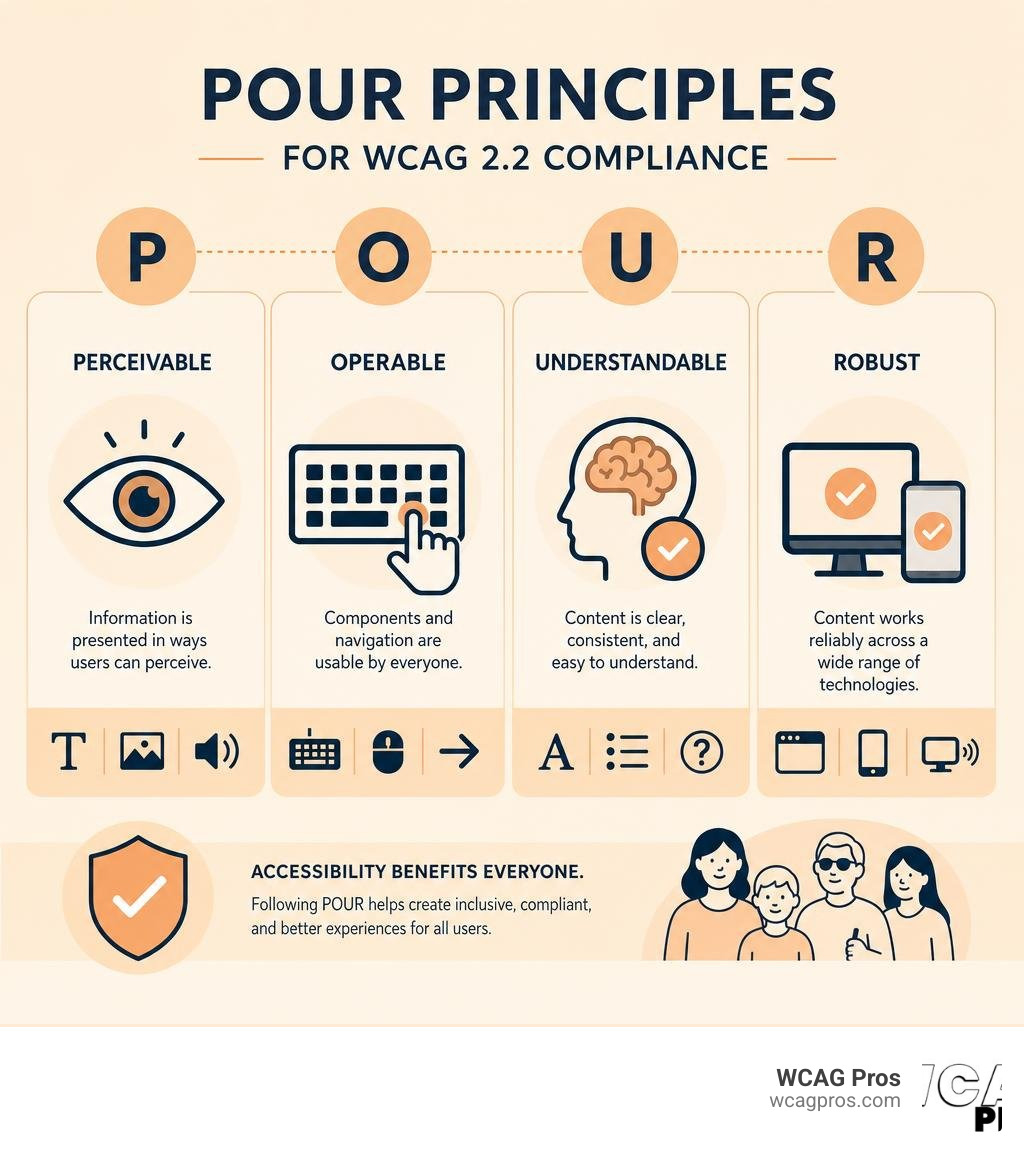
Essential website accessibility remediation company terms:
What is Website Accessibility Remediation and Why is it Essential
Digital accessibility remediation is the active process of identifying and fixing barriers on your website so that people with all types of disabilities can navigate, understand, and interact with your content. This includes individuals with visual, auditory, motor, and cognitive impairments. When we talk about remediation, we are not talking about installing a quick widget. We are talking about correcting the underlying code and design.
The necessity of this process comes down to three main pillars, which are legal protection, business growth, and ethical responsibility. From a legal standpoint, courts in the United States have consistently ruled that websites are places of public accommodation under Title III of the Americans with Disabilities Act. This means your digital storefront must be as accessible as a physical ramp at a brick and mortar location.
As of 2023, 97% of digital accessibility lawsuits targeted websites. This high percentage exists because plaintiff attorneys can use free automated testing tools to scan thousands of websites in minutes, instantly finding easy targets for demand letters. If your website has basic errors like missing alt text or unlabeled form fields, you are essentially leaving your digital front door open to litigation. To understand the financial consequences of ignoring these requirements, you can read about The Real Costs of Ignoring Website Accessibility.
Beyond the legal risks, prioritizing accessibility is a massive business opportunity. Approximately 26% of adults in the United States live with some form of disability. If your website is not accessible, you are actively turning away a quarter of your potential customer base. When disabled users encounter an inaccessible website, about 67% of them will leave the site immediately to find a competitor who accommodates their needs. By investing in proper remediation, you improve the user experience for everyone, which often leads to significant search engine optimization benefits and a noticeable increase in overall revenue.
How to Choose a Website Accessibility Remediation Company
Selecting the right partner to handle your digital compliance is a critical business decision. The market is filled with various providers, ranging from automated software developers to highly specialized manual coding agencies. To protect your business, you must select a partner that operates directly within your website code rather than relying on temporary visual adjustments.

When you look for a website accessibility remediation company, you need to ensure they have deep expertise in both automated scanning and manual expert testing. A trustworthy partner will not promise a magical instant fix. They will offer a transparent, thorough process that addresses your specific platform, whether you run WordPress, Shopify, or a completely custom built web application. For a complete understanding of how to protect your business from legal threats, check out The No Lawsuit Guide to Website Remediation.
To help you understand the landscape, we have put together a comparison table highlighting the differences between hiring a professional manual remediation partner and using automated overlay widgets.
| Feature | Manual Professional Remediation | Automated Overlay Widgets |
|---|---|---|
| Method of Fixes | Direct code level adjustments | JavaScript layer over broken code |
| WCAG 2.2 Coverage | Up to 100% of success criteria | Only 30% to 40% of criteria |
| Lawsuit Protection | Highly effective, resolves root issues | Increases risk, targeted by lawyers |
| Screen Reader Usability | Excellent, tested by real users | Poor, often overrides user settings |
| SEO Impact | Highly positive, improves site structure | Neutral or negative, slows load times |
| Code Integrity | Clean, compliant, long term solution | Temporary, breaks when site updates |
Why a Professional Website Accessibility Remediation Company Beats Overlays
Many business owners fall into the trap of installing an accessibility overlay or widget because they are cheap and promise instant compliance with a single line of JavaScript. However, these tools are highly criticized by disability advocates, technical experts, and the courts. Overlays do not fix your website code. Instead, they attempt to modify the front end presentation on the fly, which frequently fails and can even block assistive technologies from working correctly.
In 2023, there was a substantial 62% increase in digital accessibility lawsuits against businesses using accessibility widgets or overlays on their websites compared to 2022. This spike occurred because plaintiffs’ attorneys realized that these widgets are a clear sign of an inaccessible website that has not been properly coded. Furthermore, the Federal Trade Commission has taken action against companies making false compliance claims regarding automated widgets.
True compliance requires direct remediation of the source code. A professional website accessibility remediation company will manually edit your HTML, CSS, and ARIA attributes to ensure that assistive devices can read your content naturally. To learn more about why manual efforts are the only way to achieve lasting compliance, read our Website Accessibility Remediation Guide 2026.
What to Look For in a Website Accessibility Remediation Company
When vetting potential remediation partners, you should ask specific questions about their testing methodology and development practices. A professional provider should offer comprehensive page by page audits rather than just running a basic automated scan and handing you a generic report. You want a team that can actively write the code fixes for you, ensuring that your internal design is preserved while barriers are removed.
You should also verify that the company has experience working with your specific content management system or custom framework. They should provide clear compliance guarantees, detailed documentation, and a structured roadmap. For a deeper dive into choosing the best service provider for your organization, review our In Depth Guide to Website Remediation Services.
The Professional Website Accessibility Remediation Process
Achieving full compliance requires a structured, step by step roadmap. A professional remediation workflow is not a chaotic rush to patch errors. It is an orderly development cycle that integrates testing, coding, and verification.

This process ensures that every single barrier is identified, tracked, and resolved without breaking your existing design or functionality. By following a disciplined approach, your development team and your remediation partner can stay aligned from start to finish.
Step One Audit and Assessment
The first step in any legitimate remediation project is a thorough audit. This involves using advanced automated scanners to map out the entire website, followed by extensive manual testing by accessibility experts. Because automated tools only catch a portion of WCAG 2.2 violations, manual testers must review keyboard navigation, focus indicators, color contrast, and screen reader compatibility.
During this phase, we analyze the core templates, unique page layouts, and interactive elements of your website. This page by page review helps build a prioritized backlog of issues, allowing us to focus on the most critical barriers first. To learn how this systematic approach works, read our guide on How to Fix Your Website One Page at a Time.
Step Two Code Level Fixes and Content Adjustments
Once the audit is complete, the physical development work begins. Our team of programmers works directly in your website code or collaborates with your internal developers to apply precise fixes. This step involves rewriting semantic HTML, adding proper ARIA landmarks, correcting focus order, and ensuring all forms have accessible labels.
Content adjustments are also made during this phase. We add meaningful alt text to images, verify that color contrast ratios meet the required standards, and structure headings hierarchically. For a technical breakdown of the specific code changes required for compliance, you can explore Detailed Accessibility Fixes for a More Inclusive Web.
Step Three Verification and Assistive Technology Testing
After the code fixes have been deployed to a staging environment, we conduct rigorous verification testing. This step is crucial because we must ensure that the fixes actually resolve the barriers without introducing new bugs. We test the remediated pages using real assistive technologies, including screen readers like NVDA, JAWS, and VoiceOver, to confirm a seamless user experience.
Once everything is verified, we assist in preparing an Accessibility Conformance Report and a formal Accessibility Statement for your website. This documentation serves as public proof of your good faith efforts and compliance. For affordable options on getting your site verified, read about Remediation with Fixes That Won’t Break the Bank.
By verifying your website against the official W3C Web Content Accessibility Guidelines, you ensure that your digital assets are fully compliant and accessible to all users.
Frequently Asked Questions About Website Remediation
How Long Does the Website Remediation Process Take
The timeline for digital remediation depends heavily on the size of your website, its technical complexity, and the number of barriers identified during the audit. Typically, a full website remediation can take anywhere from 4 to 6 weeks. However, this timeline can extend if your site has thousands of pages, complex dynamic features, or heavy third party integrations.
If you are facing an active legal threat or regulatory deadline, some providers offer expedited services to address critical violations first. This prioritizes the high risk barriers, such as keyboard traps and inaccessible forms, to reduce your immediate legal exposure while the rest of the site is being systematically updated.
What Are the Main Regulations and Standards for Digital Accessibility
The global gold standard for digital accessibility is the Web Content Accessibility Guidelines, specifically WCAG 2.2. Under Title III of the ADA, United States courts look to WCAG 2.2 AA conformance as the benchmark for determining whether a website is accessible to the public.
Other key regulations include Section 508 of the Rehabilitation Act, which applies to federal agencies and organizations receiving federal funding, and EN 301 549, which is the European standard for digital accessibility. Conforming to WCAG 2.2 AA ensures that your business satisfies the requirements of these global laws, protecting you from litigation both domestically and internationally.
How Do We Maintain Compliance After the Initial Remediation
Website accessibility is not a one time project. Every time you upload a new blog post, add a product to your ecommerce store, or update your website theme, you risk introducing new accessibility barriers. To prevent regressions, you must establish an ongoing maintenance plan.
This plan should include regular automated scanning, quarterly manual checks, and basic accessibility training for your content creators and web developers. By building accessibility checks directly into your publishing workflow, you can keep your site compliant and inclusive for the long term. For a simple roadmap on maintaining your compliance, read How to Fix ADA Website Issues in 5 Easy Steps.
Conclusion
Partnering with a dedicated website accessibility remediation company is the most effective way to eliminate legal risks, improve your search engine rankings, and provide an inclusive experience for every user. Relying on superficial widgets or automated overlays only increases your exposure to costly lawsuits, while professional, code level remediation addresses the root of the problem.
At WCAG Pros, based in Norco CA, we specialize in providing comprehensive page by page audits covering all 54 WCAG A and AAA success criteria. We do not just hand you a report of your errors, we provide the actual code fixes to resolve them. Once the remediation is complete, we provide free re audits to grant you our official compliance badges, giving you peace of mind and public proof of your commitment to digital inclusion.
If you are ready to secure your digital presence with a team you can trust, read about our Professional ADA Remediation Services You Can Trust. To take the first step toward full digital compliance, we invite you to Schedule a Comprehensive WCAG Audit with us today.
Read more website accessibility articles
Get Help With Your Website
We'll follow up with info about:
- The process
- Cost
- Timeline
We promise to respect your privacy, and never abuse the information you provide. We will not sell or rent your information to any third party.
By submitting this form, you consent to receive SMS messages and/or emails from SEM Dynamics LLC, dba WCAG Pros. To unsubscribe, follow the instructions provided in our communications. Msg & data rates may apply for SMS. Your information is secure and will not be sold to third parties.